
Regional Gold Jewelry Traditions Across Pakistan
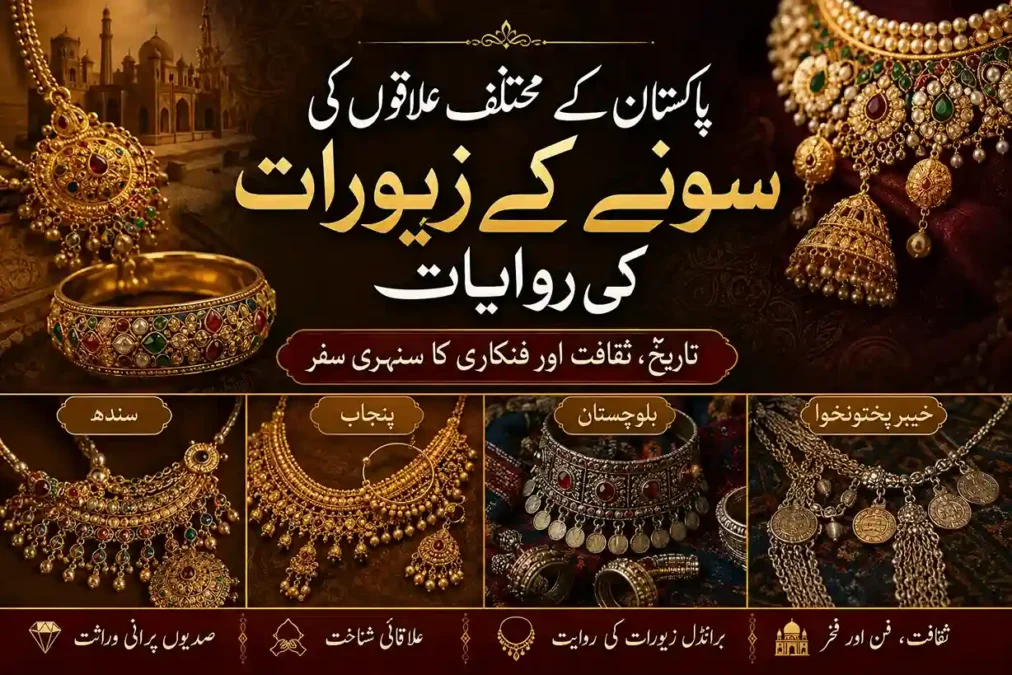
Regional Gold Jewelry Traditions Across Pakistan reflect centuries of history, craftsmanship, and cultural identity. Jewelry in Pakistan is not merely decorative; it symbolizes heritage, social status, and emotional bonds. From ancient civilizations to modern bridal fashion, Pakistani Jewelry continues to preserve stories passed down through generations.
Ancient Roots of Pakistani Gold Jewelry
The origins of Traditional Jewelry in Pakistan date back to the Indus Valley Civilization (3300–1300 BCE). Archaeological discoveries from Mohenjo-Daro and Harappa reveal necklaces, bangles, and beadwork crafted from gold, carnelian, and lapis lazuli.
These materials traveled through ancient trade routes, showing that jewelry was already a symbol of wealth, artistry, and cultural exchange thousands of years ago.
Mughal Influence on Gold Jewelry
The Mughal Era transformed gold ornamentation across the region. Mughal rulers introduced advanced techniques such as Kundan Work, Meenakari, and Polki, using emeralds, rubies, pearls, and uncut diamonds.
Iconic designs like jhumkas, chandbalis, and matha patti emerged during this time, blending Persian elegance with South Asian aesthetics. Jewelry became a strong marker of social status and celebration.
Regional Gold Jewelry Styles Across Pakistan
Sindhi Jewelry
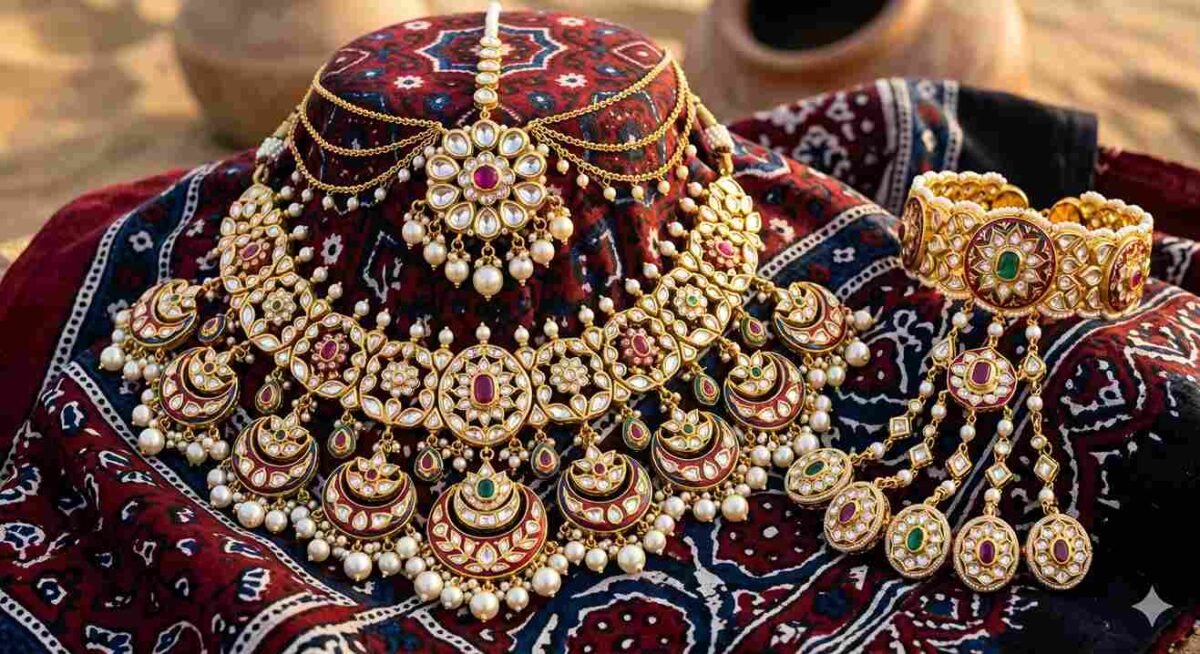
Sindhi Jewelry is known for bold designs, detailed Kundan work, and colorful Meenakari. Popular pieces include haar, hathphool, and borla, often decorated with floral motifs and vibrant enamel.
Punjabi Jewelry
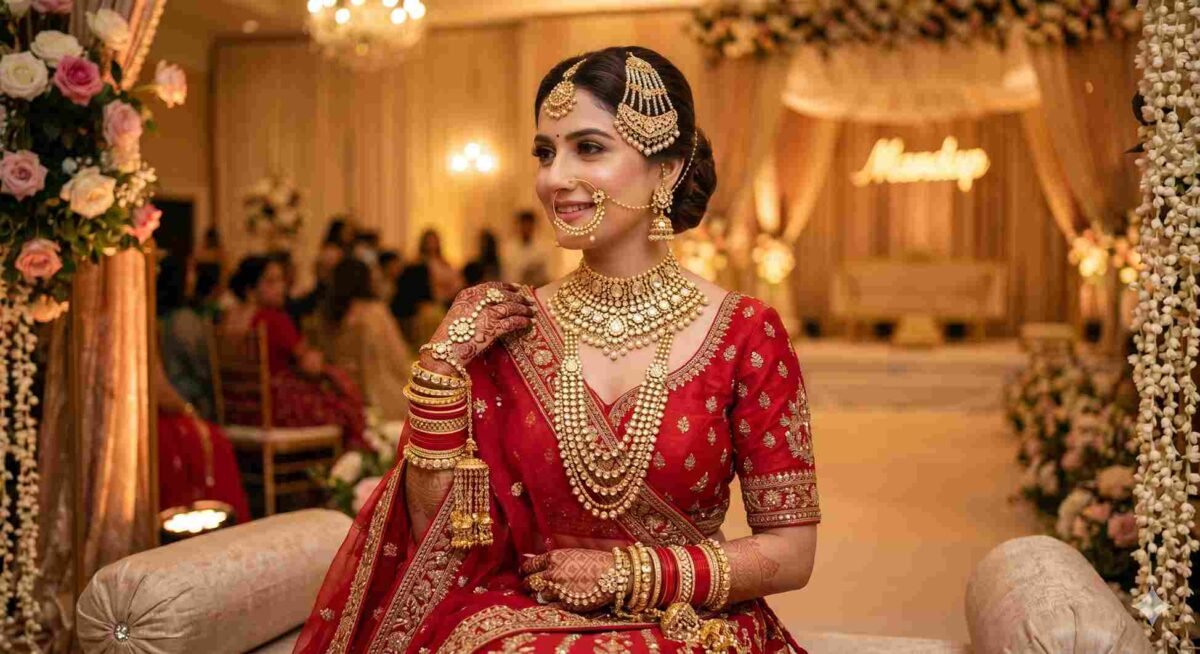
Punjabi Jewelry places strong emphasis on gold ornaments. Traditional items like nath, pasa, kara, kangan, and mala are commonly worn during weddings and festivals. Many of these pieces become treasured family heirlooms.
Balochi Jewelry
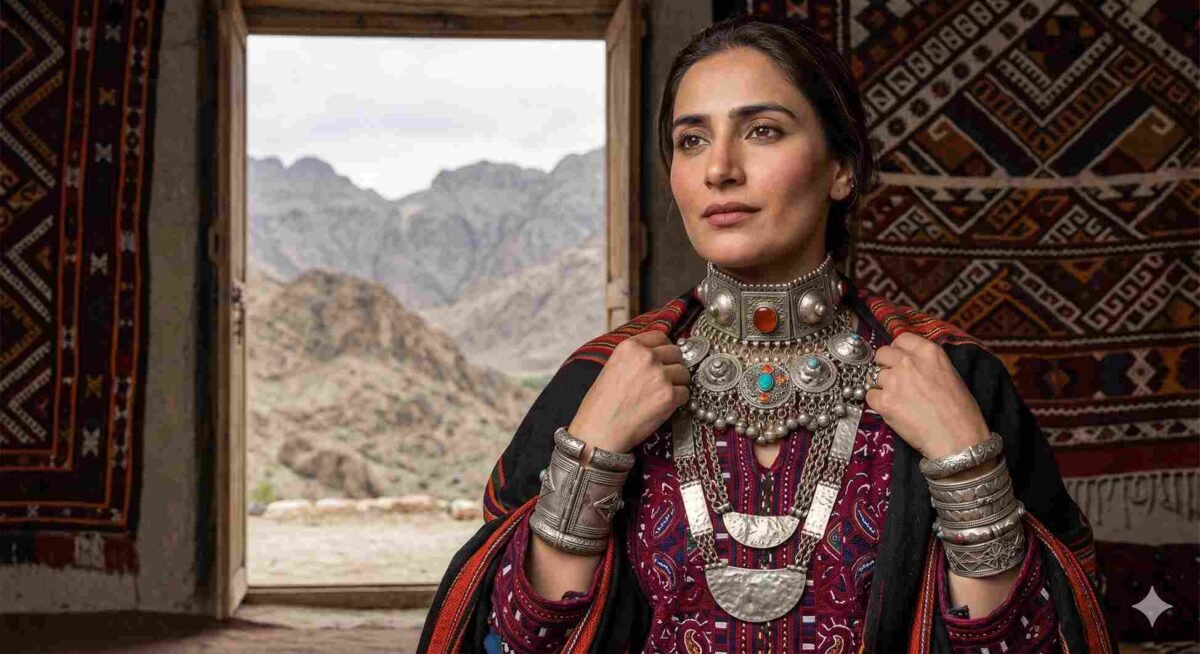
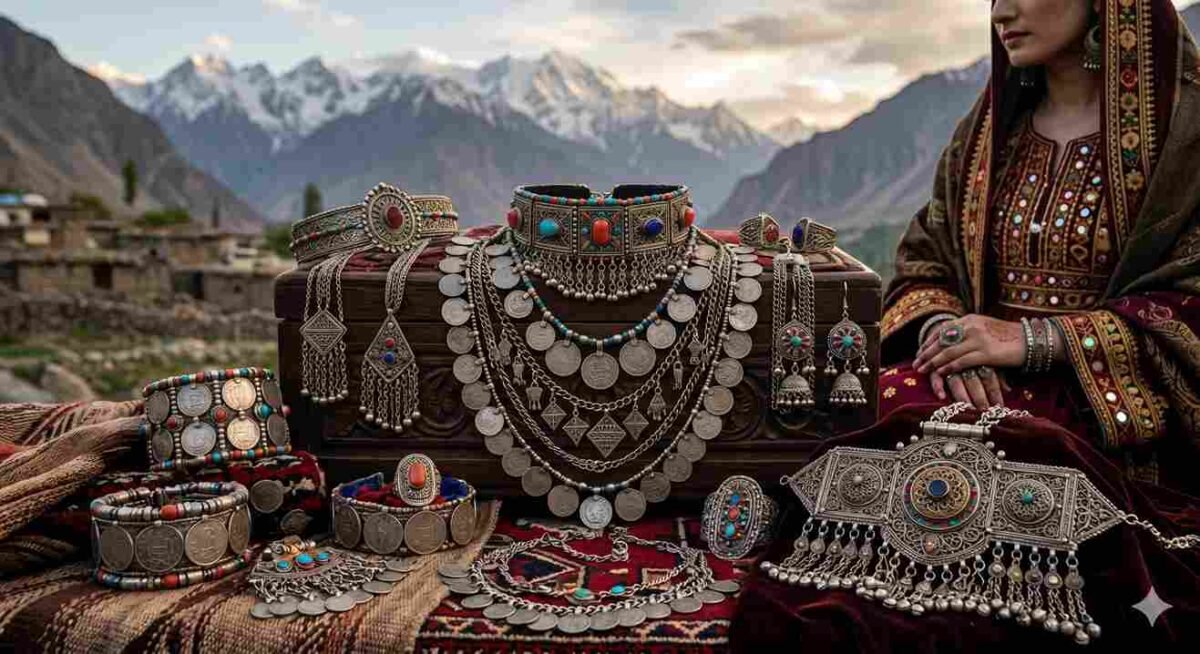
Balochi Jewelry features heavy, structured designs with tribal symbolism. Large chokers, thick bracelets, and gemstone inlays reflect strength, identity, and resilience, often crafted in gold and silver.
Pashtun & Khyber Pakhtunkhwa Jewelry
Pashtun Jewelry and Khyber Pakhtunkhwa Jewelry showcase coin jewelry, layered chains, geometric motifs, and filigree work. Central Asian influences are clearly visible in these bold and dramatic designs..
Symbolism in Traditional Gold Jewelry
Gold jewelry in Pakistan carries deep meaning beyond beauty:
- Emotional Value: Jewelry often marks life milestones and preserves family history
- Cultural Identity: Motifs like paisley, peacock, and lotus reflect folklore and regional beliefs
- Wealth Symbolism: Heavier gold pieces represent prosperity and honor
Bridal Gold Jewelry Traditions
During times of economic uncertainty, people buy gold as a safe haven asset. Events like the Russia-Ukraine war or Bridal Jewelry holds a special place in Pakistani culture. A bride’s jewelry represents blessings, protection, and love.
Common bridal pieces include:
- Maang Tikka – wisdom and marital harmony
- Jhumkas – elegance and femininity
- Churiyan – prosperity and happiness
- Payals – grace and celebration
These ornaments often become lifelong heritage jewelry.
Craftsmanship Behind Pakistani Gold Jewelry
Traditional craftsmanship relies on techniques passed through generations:
- Kundan & Polki stone setting
- Meenakari enamel detailing
- Filigree metalwork
- Hand engraving
- Gemstone inlay
Each method reflects patience, skill, and cultural continuity.
Modern Relevance and Revival
Today, Pakistani Jewelry continues to evolve. Designers create modern fusion jewelry, blending traditional gold elements with contemporary fashion. Brides increasingly choose lighter, versatile designs, while younger generations embrace heritage pieces as statement accessories.
Why These Traditions Still Matter
Regional Gold Jewelry Traditions Across Pakistan preserve identity, artistry, and history. Every ornament connects the past with the present, ensuring that cultural stories remain alive despite changing trends.
Gold jewelry in Pakistan is not just worn—it is remembered, inherited, and celebrated..


