
Desi Month Date Today in Pakistan – Live Desi Calendar 2026
According to the Nanakshahi calendar, also known as the Desi Calendar or Punjabi Calendar, the Desi month date today in Pakistan is 12 Phagan 557. Today falls in the month of Phagan, the 12th and final month of the Desi calendar year, which runs from February 12 to March 13.
نانک شاہی کیلنڈر کے مطابق، جسے دیسی کیلنڈر یا پنجابی کیلنڈر بھی کہا جاتا ہے، آج کی دیسی تاریخ پاکستان میں 12 پھگن 557 ہے۔ آج کا دن پھگن مہینے میں آتا ہے، جو دیسی کیلنڈر سال کا بارہواں اور آخری مہینہ ہے، جو 12 فروری سے 13 مارچ تک جاری رہتا ہے۔
Today’s Desi Date in Pakistan
Today's Desi Date
Today’s Desi Date in Urdu and Punjabi
Today’s Desi date in Urdu and Punjabi shows the current Desi calendar date in English, Urdu, and Punjabi for users in Pakistan. It includes the day, English date, Desi month and year, and the city name so readers can quickly confirm the accurate daily update.
Below, you can check the live Desi Date Today in Lahore — آج کی دیسی تاریخ — displayed in all three formats. The widget automatically updates the Desi month such as Phagan / پھگن, the year, and location details like Lahore, Pakistan for correct and real-time information.
🌆 Desi Date Today in Lahore — آج کی دیسی تاریخ
Tuesday
21 April 2026
8 Vaisakh 557
Lahore, Pakistan
21 April 2026
8 ویساکھ 557
لاہور، پاکستان
آج کی دیسی تاریخ
Desi Month Date Today According to the Hindu Calendar
The Desi date today according to the Hindu calendar is calculated through the lunar system and shown in the Hindu Panchang. It includes the Vikram Samvat, Shaka Year, Hindu month (Maas), Paksha (fortnight), and Tithi (lunar day). These elements change according to the moon’s position, not the English calendar.
Below, you can see today’s updated Hindu Panchang details, including the current month, paksha, and tithi, displayed automatically through our live widget.
Today's Hindu Panchang
Pausa Shukla Trayodashi Tue 21 Apr 2026
Vikram Samvat: 2083
Shaka Year: 1948 | Month: Pausa
Paksha: Shukla | Tithi: Trayodashi
Desi Calendar 2026 — Full Year View
Desi Calendar 2026 | Bikrami Samvat 2083 | Nanakshahi 557
January 2026
February 2026
March 2026
April 2026
May 2026
June 2026
July 2026
August 2026
September 2026
October 2026
November 2026
December 2026
Desi Month Date Today in Major Cities of Pakistan
Desi Date in Lahore Today
🌆 Desi Date Today in Lahore — آج کی دیسی تاریخ
Tuesday
21 April 2026
8 Vaisakh 557
Lahore, Pakistan
21 April 2026
8 ویساکھ 557
لاہور، پاکستان
آج کی دیسی تاریخ
Desi Month Date in Karachi Today
🌆 Desi Date Today in karachi — آج کی دیسی تاریخ
Tuesday
21 April 2026
8 Vaisakh 557
karachi, Pakistan
21 April 2026
8 ویساکھ 557
karachi، پاکستان
آج کی دیسی تاریخ
Desi Month Date in Islamabad Today
🌆 Desi Date Today in Islamabad — آج کی دیسی تاریخ
Tuesday
21 April 2026
8 Vaisakh 557
Islamabad, Pakistan
21 April 2026
8 ویساکھ 557
اسلام آباد، پاکستان
آج کی دیسی تاریخ
Desi Month Date in Faisalabad Today
🌆 Desi Date Today in Faisalabad — آج کی دیسی تاریخ
Tuesday
21 April 2026
8 Vaisakh 557
Faisalabad, Pakistan
21 April 2026
8 ویساکھ 557
فیصل آباد، پاکستان
آج کی دیسی تاریخ
Desi Month Date in Rawalpindi Today
🌆 Desi Date Today in Rawalpindi — آج کی دیسی تاریخ
Tuesday
21 April 2026
8 Vaisakh 557
Rawalpindi, Pakistan
21 April 2026
8 ویساکھ 557
راولپنڈی، پاکستان
آج کی دیسی تاریخ
Desi Month Date in Multan Today
🌆 Desi Date Today in Multan — آج کی دیسی تاریخ
Tuesday
21 April 2026
8 Vaisakh 557
Multan, Pakistan
21 April 2026
8 ویساکھ 557
ملتان، پاکستان
آج کی دیسی تاریخ
Desi Month Date in Gujranwala Today
🌆 Desi Date Today in Gujranwala — آج کی دیسی تاریخ
Tuesday
21 April 2026
8 Vaisakh 557
Gujranwala, Pakistan
21 April 2026
8 ویساکھ 557
گوجرانوالہ، پاکستان
آج کی دیسی تاریخ
Desi Month Date in Bahawalpur Today
🌆 Desi Date Today in Bahawalpur — آج کی دیسی تاریخ
Tuesday
21 April 2026
8 Vaisakh 557
Bahawalpur, Pakistan
21 April 2026
8 ویساکھ 557
بہاولپور، پاکستان
آج کی دیسی تاریخ
Desi Month Date in Sargodha Today
🌆 Desi Date Today in Sargodha — آج کی دیسی تاریخ
Tuesday
21 April 2026
8 Vaisakh 557
Sargodha, Pakistan
21 April 2026
8 ویساکھ 557
سرگودھا، پاکستان
آج کی دیسی تاریخ
What is the Desi Calendar?
The Desi Calendar, also called the Punjabi Calendar, is the traditional solar calendar used across Punjab, Sindh, and KPK in Pakistan and India. It divides the year into 12 months of 30–31 days each, aligned with the solar cycle.
Types of the Desi Calendar Used in Pakistan
Pakistan’s cultural and religious communities have long relied on traditional timekeeping systems rooted in South Asian astronomical heritage, collectively referred to as the Desi calendar. These indigenous calendar systems govern the scheduling of religious festivals, agricultural seasons, harvest cycles, and community rites across Punjab, Sindh, Khyber Pakhtunkhwa, and Azad Kashmir. Rather than a single unified system, the term “Desi calendar” encompasses several distinct calendrical frameworks — each tied to specific religious traditions, scholarly schools, and regional practices. Among the most prominent are the Nanakshahi, the Bikrami (Vikram Samvat), and the Saka Era calendars, each differing in their astronomical basis, institutional authority, and geographic usage across the subcontinent.
The Nanakshahi Calendar
The Nanakshahi Calendar is a solar calendar formally adopted in 1999 by the Shiromani Gurdwara Parbandhak Committee (SGPC), the apex Sikh religious body headquartered in Amritsar, India. Named in honor of Guru Nanak Dev Ji, the founder of Sikhism, this reformed calendar was designed to assign fixed Gregorian-equivalent dates to all major Sikh gurpurabs (commemorations) and religious observances, eliminating the annual drift that plagued earlier lunar-based systems. The calendar begins with the month of Chet, corresponding approximately to mid-March, and aligns each Sikh holy day to a consistent date every year. Widely adopted by Sikh institutions across Canada, the United Kingdom, the United States, and Australia, the Nanakshahi Calendar represents a deliberate modernization effort — creating liturgical predictability while preserving the sanctity of Sikh historical events. In Pakistan, gurdwaras in Nankana Sahib, Lahore, and Hassan Abdal generally follow this system for organizing yatras and religious programs.
Nanakshahi Calendar (Sikh Calendar)
Gregorian: Tue 21 Apr 2026
Nanakshahi Date: 8 Vaisakh 557
The Bikrami (Vikram Samvat) Calendar
The Bikrami Calendar, also known as Vikram Samvat, is an ancient luni-solar calendar system believed to have originated around 57 BCE, traditionally attributed to the reign of Emperor Vikramaditya. Unlike the purely solar Nanakshahi system, the Bikrami calendar reconciles lunar months with the solar year through periodic intercalation — the addition of a leap month (Adhik Maas) roughly every 2.5 to 3 years. This structural flexibility causes key dates to shift by one to two days each year relative to the Gregorian calendar, making event planning variable across communities. The calendar is divided into twelve lunar months Chet, Vaisakh, Jeth, Harh, Sawan, Bhadon, Assu, Kattak, Maghar, Poh, Magh, and Phagan each beginning with the new or full moon depending on the regional tradition (Amanta vs. Purnimanta school). In Pakistan, the Bikrami system remains the preferred calendar among traditional Sikh communities, Udasis, and Hindu populations who celebrate festivals like Diwali, Holi, Vaisakhi (in its traditional form), and Tij according to its lunar reckoning. It carries deep cultural resonance in rural Punjabi communities where agricultural rhythms align with its seasonal markers.
Bikrami Calendar 2026
Bikrami Samvat: 2083
The Saka Era Calendar
The Saka Era Calendar, also known as the Indian National Calendar or Shalivahana Shaka, is the official civil calendar of the Government of India, adopted on March 22, 1957, following the recommendations of the Calendar Reform Committee chaired by scientist Meghnad Saha. Its epoch year zero corresponds to 78 CE, placing the current Saka year roughly 78 years behind the Gregorian count. The calendar is solar in structure, with the year beginning on 1 Chaitra (corresponding to March 22 in regular years and March 21 in leap years), and comprises twelve months calibrated to the tropical solar year. While it shares some nomenclature with older Hindu calendrical traditions, the Saka Era Calendar is primarily an administrative and governmental instrument, used in official Indian gazettes, All India Radio broadcasts, and government communications. It holds limited liturgical or folk usage in Pakistan, where it is neither officially adopted nor widely recognized in everyday cultural practice though it may appear in comparative calendrical scholarship and historical texts referencing the Saka chronological system.
[saka_calendar]
How Are the Nanakshahi and Bikrami Calendars Different?
| Nanakshahi | Bikrami |
|---|---|
| This calendar is named after Guru Nanak Sahib, and its year 1 starts in 1469 CE, the year of birth of Guru Nanak | This Samvat is named after Maharaja Bikramajit, supposed to have reigned in Ujjain more than 2000 years ago, though Historians are not unanimous on whether such a Maharaja was real or a fictitious person |
| Calendar Type: based on the Tropical year — a solar calendar designed to keep seasons stable | Calendar Type: based on the Sidereal year — a lunisolar system where months shift slowly over decades |
| Based on length of 365d 5h 48m 45s | Based on length of 365d 6h 9m 10s; some panchang editors still use the erroneous Surya Siddhanta length of 365d 6h 12m 36s, prevalent in the Guru period |
| Start Date Epoch: year begins on 1 Chet, corresponding to March 14, N.S. 1 | Start Date Epoch: year begins on Chet Sudi 1; in 2001 CE, 2058 Bikrami completed and begins on 26 March |
| Month Structure: has 12 months of fixed lengths — first five months have 31 days each, last seven have 30 days each — a very simple rule to remember | Month Structure: Months may contain 29, 30, 31, or 32 Days with no simple determination of the number of days in a given month |
| Fixation of Dates: ensures important dates, e.g., Gurpurabs, fall on the same day every year in the Gregorian calendar | Fixation of Dates: dates shift yearly, causing festivals to fluctuate and change annually in the CE calendar |
| Sangrands are fixed in the Common Era | Sangrand depends on the entrance of the sun into the rasis, so dates of Sangrands are not fixed in the Common Era |
| Permanent relation between seasons and months — will stay aligned according to Gurbani | Months will shift against seasons on the average 1 day per 70–71 years; they have already shifted 7–8 days since Guru Nanak Sahib‘s time |
| Leap Year rule is fixed: last month Phagun adds one day — 1 extra day — every four years | No fixed Leap Year rule; occurs every four years but occasionally after three years |
| All Gurpurbs occur once every year according to both NS and CE calendars | Gurpurb dates keep changing year to year in the CE calendar; in some years there is no Parkash Gurpurb for Guru Gobind Singh Sahib, while in others it occurs twice in one year — in 1999 CE, there was no Parkash Gurpurb at all |
| 23rd Poh — Parkash of Guru Gobind Singh Sahib — always falls on 5th January; gave precedence to original solar dates over lunar English dates | same Gurpurb was celebrated on two different dates — 13th January at Patna Sahib and 14th January in Punjab in 2000 CE, based on Poh Sudi 7 |
| No malmaas, No unclean month in the year; No month or day is clean or unclean according to Gurbani | mal mas — an unclean month — is added every two to three years in the lunar year to keep it in step with the Solar year; in 2001 CE, there will be two months of lunar Asu — one mal, other shudha |
| Gurpurbs are fixed according to both Nanakshahi and Common Era calendars | During the mal month, Gurpurbs cannot be celebrated — the whole thing is contrary to Gurbani |
| Gurpurbs fixed according to solar dates — e.g., 23 Poh always on 5 January | Gurpurbs fixed according to lunar tithis — e.g., Poh Sudi 7 — therefore changing year to year |
| The lunar year balance is not an issue — 365 days are fixed | lunar year contains 354–355 days; solar year has 365–366 days; when mal mas is added, lunar year becomes 383–384 days long |
| Another problem of the Bikrami system does not exist in this system — the same tithi issue is eliminated | Another problem: the same tithi can happen across two days, and two tithis can happen in one day |
| Year 533 Nanakshahi is current, begins 14 March, 2001 | 2058 Bikrami begins Chet Sudi 1, 26 March, 2001 CE |
| first mention of this calendar is clear and historically traceable to 1469 CE | first mention of Bikrami Samvat in inscriptions does not occur until circa 800 years after the supposed reign of Bikramajit |
| Features 2. through 10. all point to consistency, clarity, and alignment with Gurbani | Features 2. through 10. reveal compounding inconsistencies — UP Surya Siddhanta Panchangas vs Punjab Panchangs pulling proponents in opposite directions annually |
Nanakshahi vs Bikrami Calendar
| Feature | Nanakshahi | Bikrami Samvat |
|---|---|---|
| Introduced | 1999 CE (SGPC reform) | ~57 BCE (Vikramaditya era) |
| Type | Solar (fixed) | Luni-solar (variable) |
| Month Lengths | Fixed: 5 months of 31 days, 7 of 30 days | Variable: 29-32 days by moon |
| Year Length | 365 days exactly | 354-385 days |
| Leap Year | None needed — Chet is always 31 days | Adhika Maas added every 2-3 years |
| Sangrand Dates | Same Gregorian date every year (Vaisakh = 14 April always) | Varies by 1-2 days annually |
| Used By | Most Sikh institutions globally (SGPC) | Traditional Sikhs and Hindus of Punjab |
| Gurpurabs | Fixed Gregorian dates (Guru Nanak = 15 November) | Follows lunar tithi (varies annually) |
| Current Year (2026) | Nanakshahi 558 | Bikrami Samvat 2083 |
| Controversy | Rejected by some traditional Sikhs | Accepted by traditionalists; complex intercalation |
History of the Desi Calendar in Pakistan
Ancient Roots and the Desi System
The Desi calendar has ancient roots, originally developed for agricultural purposes and tied to seasons and rut (mausam). This solar-based system divides the year into twelve months, each corresponding with the Sun’s entry into different zodiac signs. While the lunar Hijri calendar regulates religious life for Muslims in Pakistan, the Desi system persisted for centuries among rural farming communities in Punjab, serving as their calendar for agricultural work.
Structure and Modern Impact
The Seasonal Structure includes major periods: Garmi (summer) and Siala (winter)—crucial for local farmers. Key months are Chet, Vaisakh (starting around mid-March), Jeth, Harh, Sawan, Bhadon, Assu, Katak, Maghar, Poh, Magh, and Phagun. The Impact of Modernization came when the British introduced the Gregorian calendar in the 18th century, formally adopted in 1947. However, the Desi calendar remains in use for festivals and cultural events, serving as a repository of indigenous knowledge about ecology, weather patterns, and agriculture. Its Distinction from the distinct Sikh Nanakshahi calendar (established later in 1999) shows how communities developed their own solar epoch systems.
Desi Calendar vs Gregorian Calendar vs Islamic Hijri — Key Differences
The Desi luni-solar calendar combines lunar months with solar years, staying aligned with seasons through an extra month called Adhik Maas, inserted every 2–3 years to synchronize with the sun. The Gregorian calendar runs on a pure solar cycle of 365 days with a leap year every 4 years adding an extra day to keep it on track. The Islamic Hijri calendar, on the other hand, is strictly lunar only 354 or 355 days long, approx 11 days shorter than the Gregorian solar year, which means its months and festivals shift backwards through seasons every year.
Calendar Comparison: Desi vs Gregorian vs Islamic vs Bikrami
| Feature | Gregorian | Islamic (Hijri) | Desi / Nanakshahi | Bikrami (Hindu) |
|---|---|---|---|---|
| Type | Solar | Lunar | Solar (fixed) | Luni-solar |
| Year Start | 1 January | 1 Muharram | 1 Chet (14 March) | 1 Chaitra (variable) |
| Months | 12 (28-31 days) | 12 (29-30 days) | 12 (30-31 days, fixed) | 12 + leap month |
| Year Length | 365/366 days | 354/355 days | 365 days (fixed) | ~365 days + intercalary |
| Current Year (2026) | 2026 | 1447 AH | 557 NS | 2083 BS |
| Today | 21 April 2026 | Lunar varies | 8 Vaisakh 557 | 8 Vaisakh 2083 |
| Used In | Global standard | Islamic world | Punjab, Sindh, KPK farming and festivals | Hindu religious use |
| Leap Year | Every 4 years | 30-year cycle | No leap year needed | Extra month (Adhika Maas) |
| Origin | Julius Caesar, reformed 1582 | Hijra of Prophet (622 CE) | Vikram era; reformed 1999 as Nanakshahi | Vikramaditya era (~57 BCE) |
⚡ The Core Difference in One Line
🔹 Gregorian locks to the sun. 🔹 Hijri follows the moon. 🔹 Desi follows both — and adjusts to stay in season.
All three systems serve a clear purpose — the Gregorian handles modern civil life, the Hijri guides religious worship, and the Desi keeps farming, harvest, and cultural identity alive across South Asia to this day.
All 12 Desi Months – Names, Dates, and Meaning
12 Desi Month Names — Meanings and Origins
| # | Desi Name | اردو | ਪੰਜਾਬੀ | Season | Days | Etymology |
|---|---|---|---|---|---|---|
| 1 | Chet | چیت | ਚੇਤ | Spring | 31 | From Sanskrit Chaitra – the budding month |
| 2 | Vaisakh | ویساکھ | ਵੈਸਾਖ | Spring | 31 | From Sanskrit Vaishakha – harvest month |
| 3 | Jeth | جیٹھ | ਜੇਠ | Summer | 31 | From Sanskrit Jyeshtha – the elder/hottest |
| 4 | Harh | ہاڑھ | ਹਾੜ | Monsoon | 31 | From Sanskrit Ashadha – monsoon begins |
| 5 | Sawan | ساون | ਸਾਵਣ | Monsoon | 31 | From Sanskrit Shravana – peak rains |
| 6 | Bhadon | بھادوں | ਭਾਦੋਂ | Monsoon | 30 | From Sanskrit Bhadrapada – harvest begins |
| 7 | Assu | اسّو | ਅੱਸੂ | Autumn | 30 | From Sanskrit Ashwin – autumn winds |
| 8 | Katik | کتک | ਕੱਤਕ | Autumn | 30 | From Sanskrit Kartika – lamp festival month |
| 9 | Maghar | مگھر | ਮੱਘਰ | Winter | 30 | From Sanskrit Margashirsha – early winter |
| 10 | Poh | پو | ਪੋਹ | Winter | 30 | From Sanskrit Pausha – the coldest month |
| 11 | Magh | ماگھ | ਮਾਘ | Winter | 30 | From Sanskrit Magha – Mela Maghi and Lohri |
| 12 | Phagan | پھگن | ਫੱਗਣ | Spring | 30 | From Sanskrit Phalguna – Basant and Holi month |
Chet — 14 March to 13 April
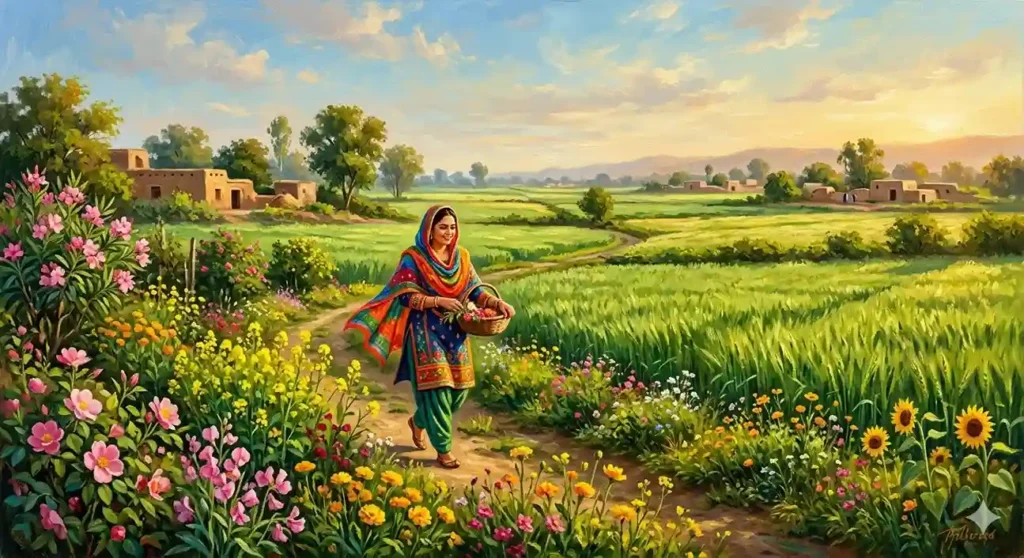
Chet is the first month of the Desi calendar, marking the start of a new year. It falls around March and April, when the cold of winter begins to fade and the weather slowly turns warmer. This transition brings fresh life to nature, trees grow new leaves, flowers begin to bloom, and the fields start looking green again. It is a month that feels like a fresh start, both in the calendar and in the world around us.
Chet Month چیت ਚੇਤ
| Season | Spring |
|---|---|
| Days | 31 |
| Sangrand 2026 | 14 March 2026 |
| Name Meaning | From Sanskrit Chaitra – the budding month |
| Main Crops | Wheat (heading), Sugarcane (planting), Vegetables (spring sowing) |
| Farming Tasks | Wheat irrigation and fertilizer top-dress; plant sugarcane cuttings; prepare kharif nurseries |
Vaisakh — 14 April to 14 May
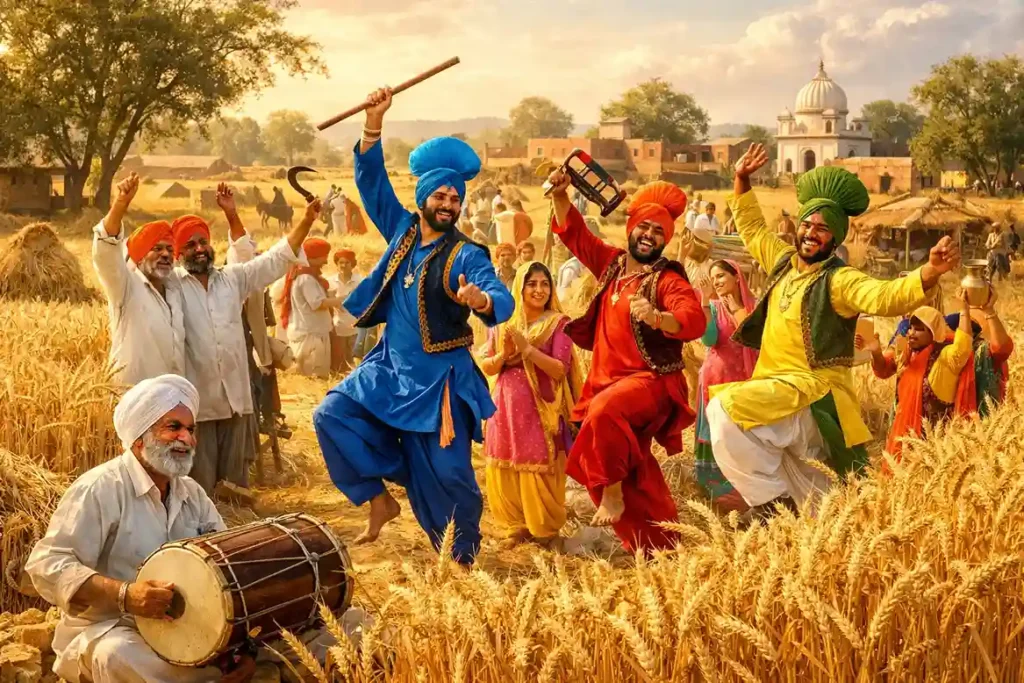
Vaisakh is the second month of the Desi calendar, coming right after Chet. It falls around April and May, when the weather grows noticeably warmer and the days stretch longer than before. This is the month when farmers head out to their fields to harvest their crops, making it one of the most important and busy months in rural Punjab. The trees are now full of leaves, offering much-needed shade as the heat of the season slowly begins to take hold.
Vaisakh Month ویساکھ ਵੈਸਾਖ
| Season | Spring |
|---|---|
| Days | 31 |
| Sangrand 2026 | 14 April 2026 |
| Name Meaning | From Sanskrit Vaishakha – harvest month |
| Main Crops | Wheat harvest (primary), Mustard harvest, Rice nursery prep |
| Farming Tasks | Harvest wheat; thrash and store; prepare paddy nurseries; cotton sowing begins |
Jeth — 15 May to 14 June
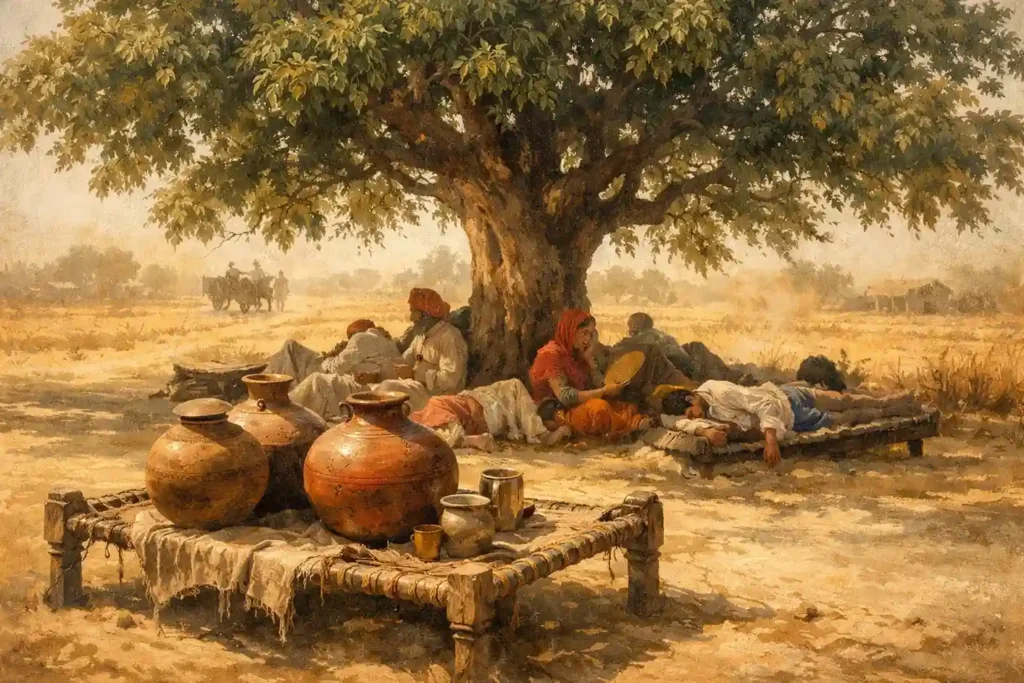
Jeth is the third month of the Desi calendar, falling around May and June, and it is widely known as one of the hottest months of the year. The sun blazes down with full intensity, making the outdoors feel almost unbearably warm, especially during the afternoon hours. Despite the harsh heat, this month plays an important role for nature — plants and crops soak up the abundant sunlight and grow at their strongest. It is a month that demands patience, shade, and plenty of cold water!
Jeth Month جیٹھ ਜੇਠ
| Season | Summer |
|---|---|
| Days | 31 |
| Sangrand 2026 | 15 May 2026 |
| Name Meaning | From Sanskrit Jyeshtha – the elder/hottest |
| Main Crops | Cotton sowing, Rice transplant prep, Maize sowing |
| Farming Tasks | Sow cotton; transplant rice seedlings; irrigate mango orchards; protect crops from heat |
Harh — ( 15 June to 15 July )
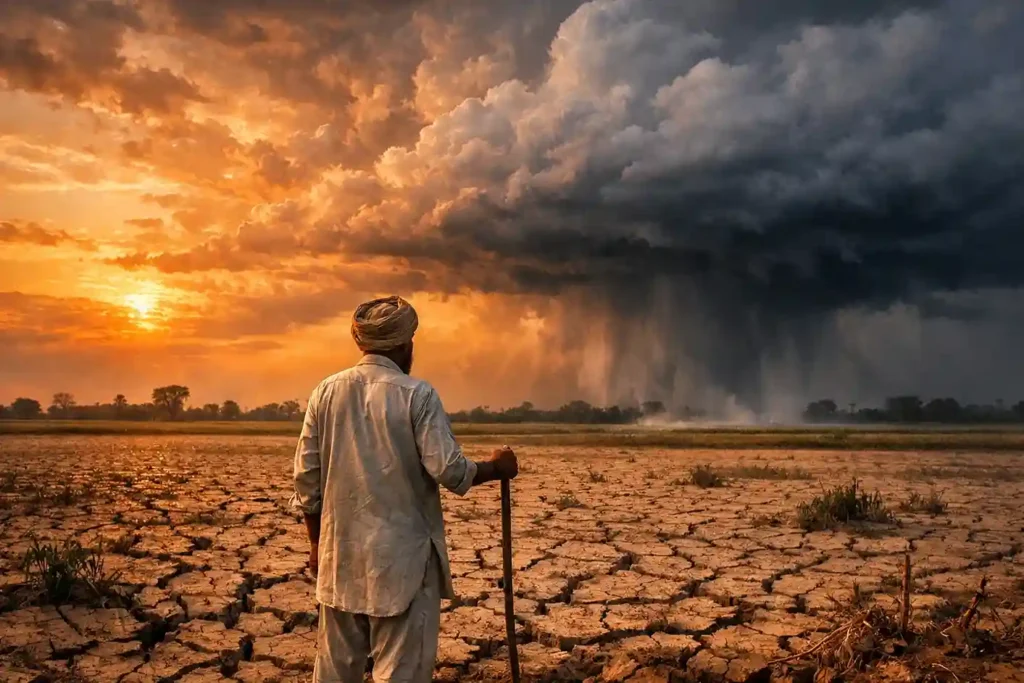
Harh is the fourth month of the Desi calendar, falling around June and July, right at the peak of summer. The heat during this month is at its most intense, with temperatures soaring and the sun showing no mercy throughout the day. Despite the scorching conditions, this is actually a very active month for agriculture — plants are growing steadily, absorbing the heat and pushing through the dry ground. Freshly harvested fields begin to recover and new crops start taking shape, quietly getting ready for the next cutting season.
Harh Month ہاڑھ ਹਾੜ
| Season | Monsoon |
|---|---|
| Days | 31 |
| Sangrand 2026 | 15 June 2026 |
| Name Meaning | From Sanskrit Ashadha – monsoon begins |
| Main Crops | Rice transplant, Sugarcane tillering, Cotton establishment |
| Farming Tasks | Transplant paddy from nursery to fields; weed cotton; monsoon irrigation management |
Sawan — 16 July to 15 August
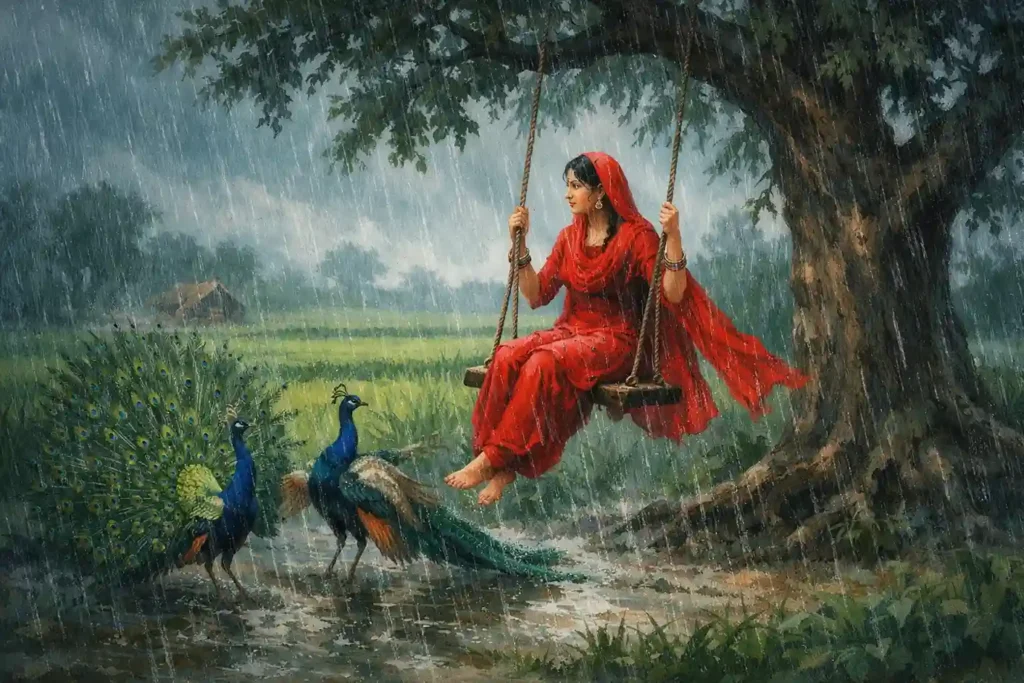
Sawan is the fifth month of the Desi calendar, falling around July and August, and it is arguably the most beloved month of the year. This is the rainy season, when the monsoon finally arrives and brings long-awaited relief from the brutal summer heat. The cool rains pour down, the air feels fresh again, and everything around suddenly comes alive. Plants and crops thrive during this month, drinking up the abundant rainwater and growing at a remarkable pace. For many people across Punjab, Sawan carries a special feeling — the smell of wet soil, the sound of raindrops, and the sight of lush green fields make it a month that stays close to the heart.
Sawan Month ساون ਸਾਵਣ
| Season | Monsoon |
|---|---|
| Days | 31 |
| Sangrand 2026 | 16 July 2026 |
| Name Meaning | From Sanskrit Shravana – peak rains |
| Main Crops | Rice growing, Cotton boll formation, Maize tasseling |
| Farming Tasks | Irrigate rice; spray for cotton bollworm; maize fertilizer; vegetable sowing |
Bhadon — 16 August to 14 September
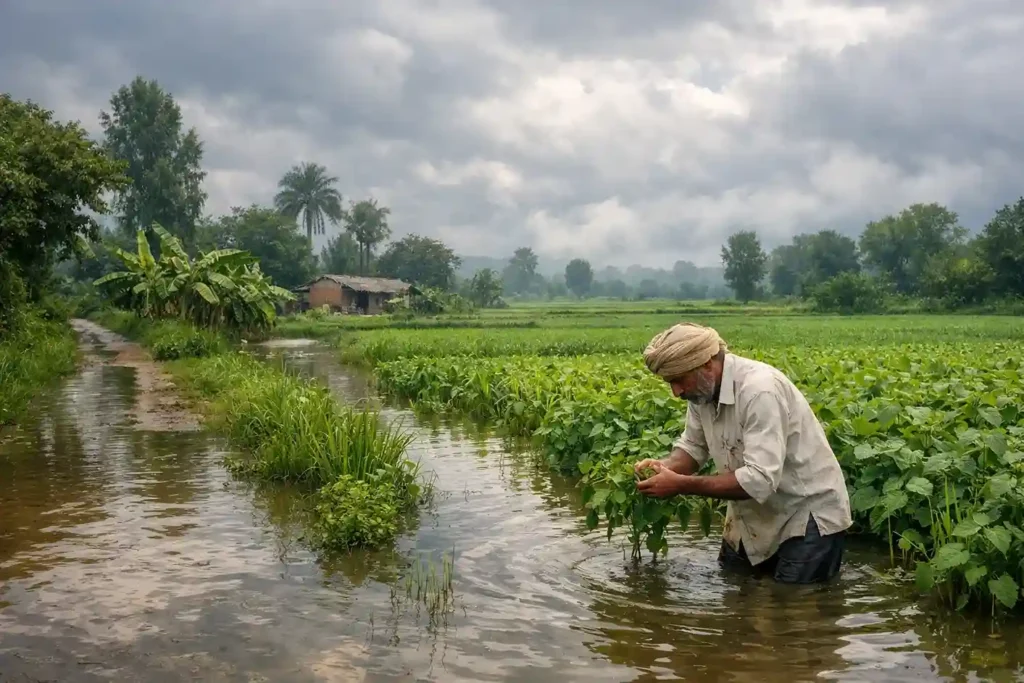
Bhadon is the sixth month of the Desi calendar, falling around August and September, and it arrives at the tail end of the monsoon season. The weather during this month is neither too hot nor too cold, but the air is thick, humid, and damp from weeks of continuous rainfall. Fields and forests are at their greenest during Bhadon, as the soil is fully soaked and crops are growing at a steady and healthy pace. It is a quiet but important month for farmers, as the hard work put into the ground during the earlier months begins to visibly pay off.
Bhadon Month بھادوں ਭਾਦੋਂ
| Season | Monsoon |
|---|---|
| Days | 30 |
| Sangrand 2026 | 16 August 2026 |
| Name Meaning | From Sanskrit Bhadrapada – harvest begins |
| Main Crops | Rice heading, Cotton bolls opening, Fodder crops |
| Farming Tasks | Harvest early rice; pick cotton; sow autumn vegetables; prepare rabi land ploughing |
Assu — 15 September to 14 October

Assu is the seventh month of the Desi calendar, falling around September and October, marking the gentle shift from the rainy season into early autumn. The monsoon rains begin to fade away, and the weather starts finding its balance — days remain mild with a touch of lingering warmth, while the nights grow noticeably cooler and more comfortable. This contrast between warm days and relaxed nights gives Assu a very pleasant and refreshing feel compared to the months before it. Crops that have been growing through the rainy season begin to mature during this month, and the landscape slowly transitions from deep green to softer golden tones as harvest time approaches.
Assu Month اسّو ਅੱਸੂ
| Season | Autumn |
|---|---|
| Days | 30 |
| Sangrand 2026 | 15 September 2026 |
| Name Meaning | From Sanskrit Ashwin – autumn winds |
| Main Crops | Rice harvest (main), Cotton picking, Maize harvest |
| Farming Tasks | Combine or manual rice harvest; full cotton picking; maize harvest; land prep for rabi |
Katik — 15 October to 13 November
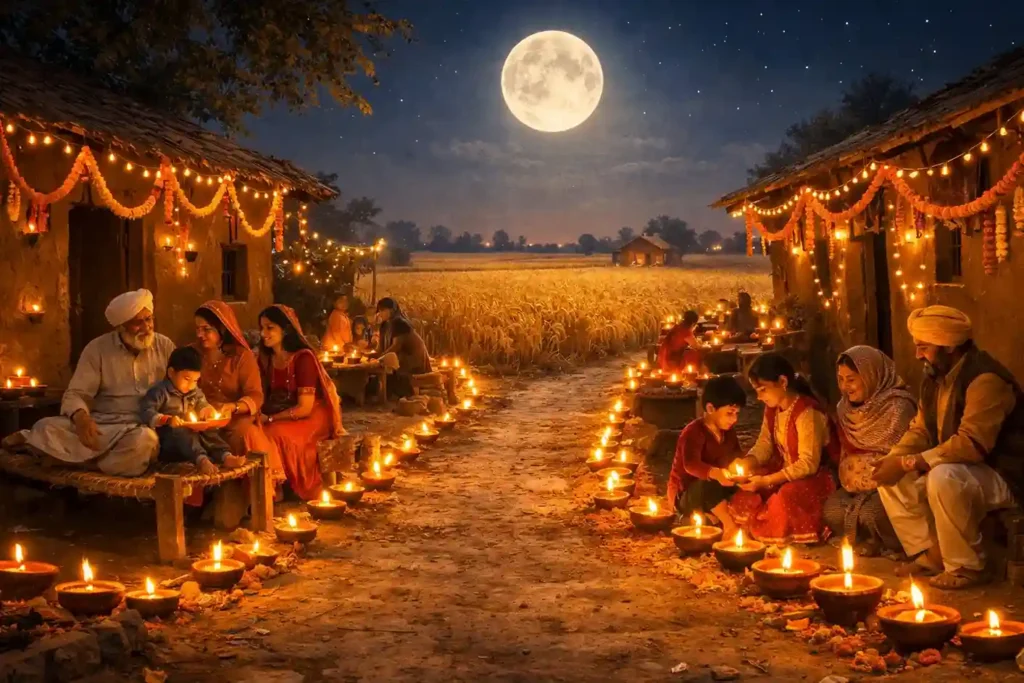
Kattak is the eighth month of the Desi calendar, falling around October and November, arriving with a sense of calm and comfort after the long rainy season. The weather during this month is at its most pleasant — not too hot, not too cold — making it one of the most enjoyable months of the entire year. The skies are clear, the air feels crisp and clean, and the landscape carries a beautiful golden tone as crops reach full maturity. It is a wonderful time to step outside, enjoy nature, and breathe in the fresh autumn air. For farmers, Kattak is also a rewarding month as the harvest is in full swing, bringing the fruits of an entire season’s hard work finally to hand.
Katik Month کتک ਕੱਤਕ
| Season | Autumn |
|---|---|
| Days | 30 |
| Sangrand 2026 | 15 October 2026 |
| Name Meaning | From Sanskrit Kartika – lamp festival month |
| Main Crops | Wheat sowing, Mustard sowing, Cotton final picking |
| Farming Tasks | Sow wheat (prime window); sow mustard and canola; finish cotton picking; plant garlic |
Maghar — 14 November to 13 December
Maghar is the ninth month of the Desi calendar, falling around November and December, and it marks the official start of winter in the Desi year. The warmth of autumn gradually fades away, and a cool, crisp chill begins to settle into the air. Days grow noticeably shorter while the nights stretch longer and cooler with each passing week. Trees begin to shed their leaves and slowly move into their resting phase, giving the landscape a quiet and bare beauty. There is a calm and peaceful feeling that comes with Maghar — the busy harvest season has passed, the fields are resting, and life around settles into a slower, more relaxed rhythm.
Maghar Month مگھر ਮੱਘਰ
| Season | Winter |
|---|---|
| Days | 30 |
| Sangrand 2026 | 14 November 2026 |
| Name Meaning | From Sanskrit Margashirsha – early winter |
| Main Crops | Wheat growing, Mustard growing, Vegetable winter crops |
| Farming Tasks | Irrigate wheat; apply nitrogen topdress; sow lentils and chickpea; harvest late cotton |
Poh — 14 December to 12 January
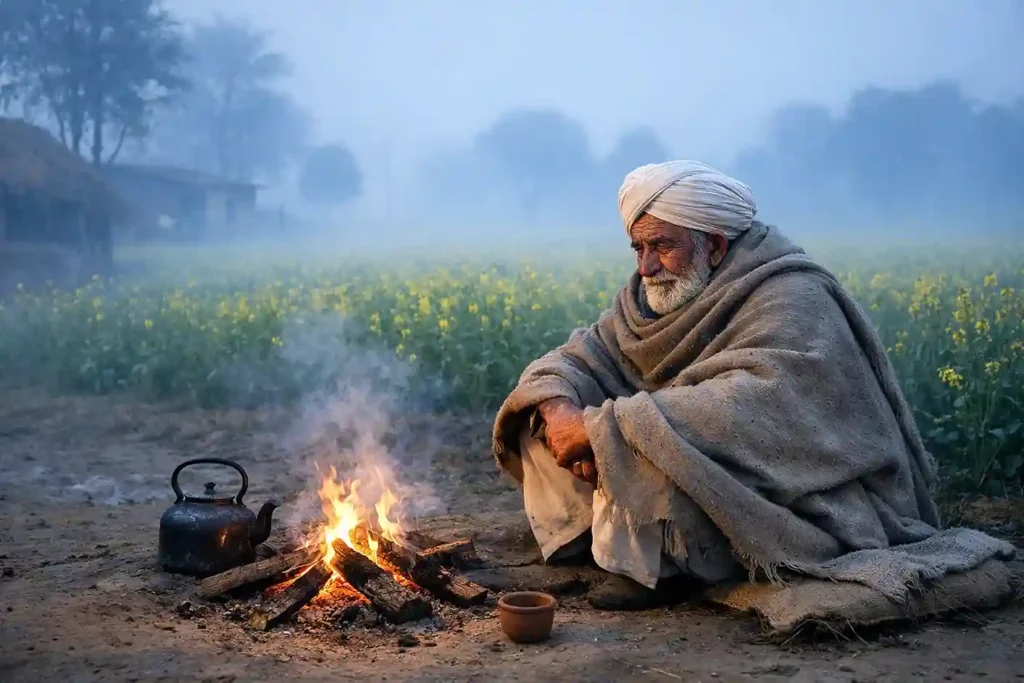
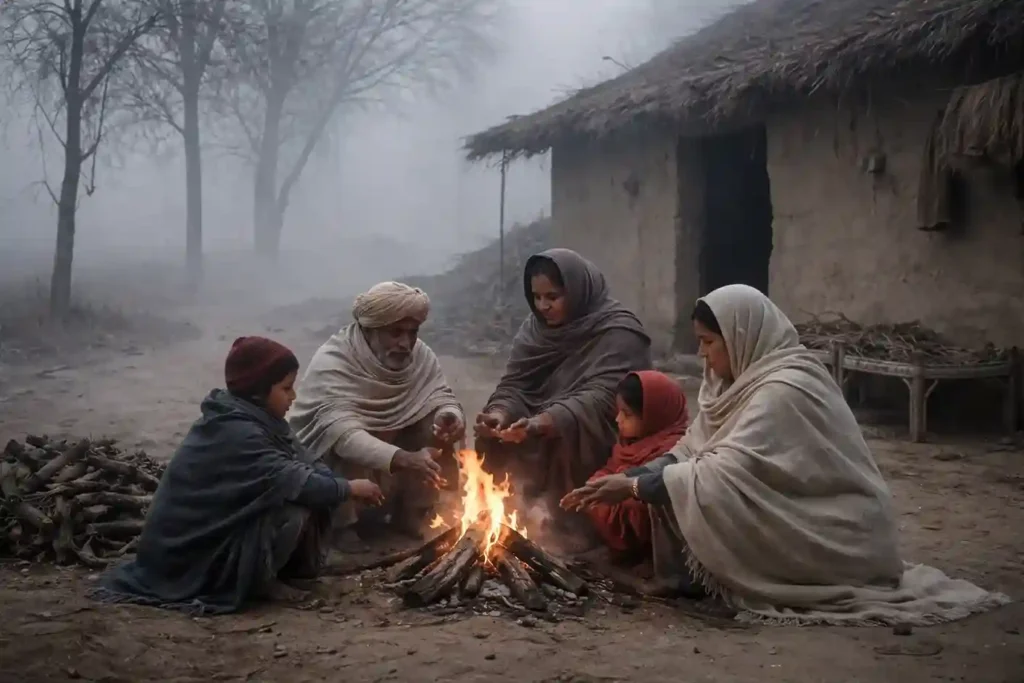
Poh is the tenth month of the Desi calendar, falling around December and January, and it is widely regarded as the coldest month of the entire Desi year. Temperatures drop to their lowest, dense fog blankets the fields and roads in the early mornings, and in many higher regions snowfall becomes a common sight. It is a month that demands extra care and attention, especially for plants and crops — overwatering during this time can do more harm than good, so less water and more protection is the key. Many delicate plants are brought indoors to shield them from the biting cold and frost. Despite the harsh conditions, there is a certain cozy charm to Poh — thick shawls, warm fires, and steaming cups of tea become the true companions of this month.
Poh Month پو ਪੋਹ
| Season | Winter |
|---|---|
| Days | 30 |
| Sangrand 2026 | 14 December 2026 |
| Name Meaning | From Sanskrit Pausha – the coldest month |
| Main Crops | Wheat tillering, Mustard flowering, Potato growing |
| Farming Tasks | Wheat frost protection; mustard irrigation; harvest potato and carrot; prune fruit trees |
Magh — 13 January to 11 February

Magh is the eleventh month of the Desi calendar, falling around January and February, and while it still carries the deep chill of winter, it quietly brings with it the first whispers of change. The cold remains strong, but the days begin to grow just a little longer, and the sunlight starts to feel slightly warmer than it did in Poh. Towards the end of Magh, nature begins to stir — some plants slowly wake up from their winter sleep, tiny buds start appearing on bare branches, and the ground begins to soften. It is a month that sits right on the edge of two seasons, still cold but full of the quiet promise that spring is not far away.
Magh Month ماگھ ਮਾਘ
| Season | Winter |
|---|---|
| Days | 30 |
| Sangrand 2026 | 13 January 2026 |
| Name Meaning | From Sanskrit Magha – Mela Maghi and Lohri |
| Main Crops | Wheat heading, Mustard pod fill, Sugarcane harvesting |
| Farming Tasks | Irrigate wheat for heading; harvest sugarcane; spray for wheat rust; sow early spring veg |
Phagan — 12 February to 13 March
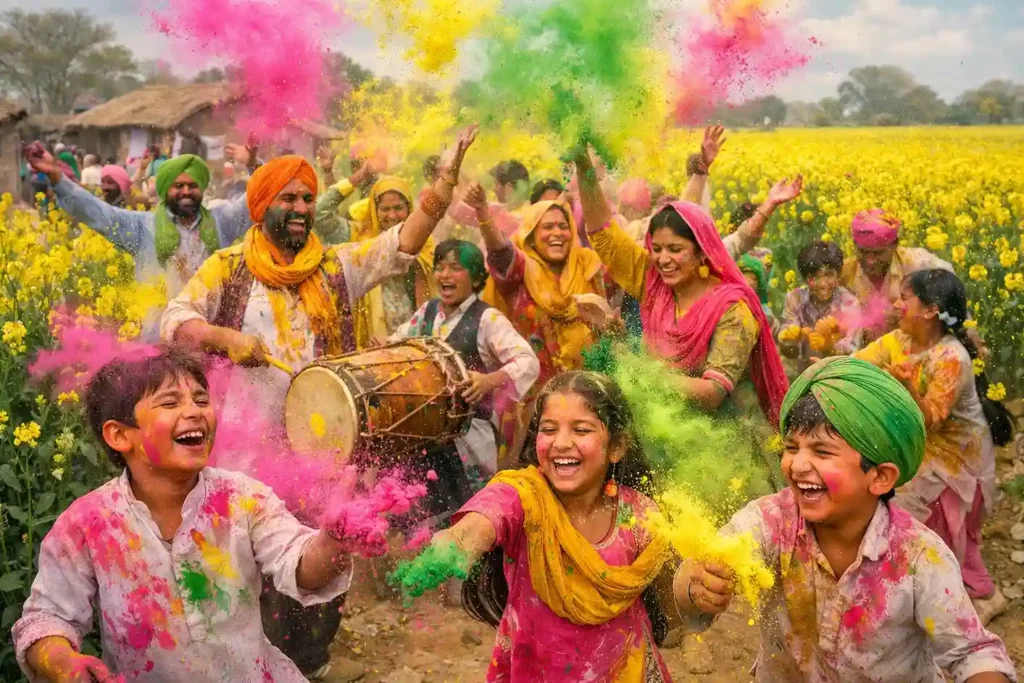
Phagun is the twelfth and final month of the Desi calendar, falling around February and March, and it arrives like a celebration of new beginnings. This is the month when spring truly takes hold — colorful flowers burst into bloom, the air turns fresh and warm, and the entire landscape comes alive with energy and color. The harsh memories of winter fade quickly as the days grow longer, brighter, and more inviting. It is a joyful and festive month, famously associated with celebrations like Basant, where the spirit of the season is felt in full. Phagun is nature’s way of closing one chapter and opening another — a beautiful and hopeful end to the Desi year.
Phagan Month پھگن ਫੱਗਣ
| Season | Spring |
|---|---|
| Days | 30 |
| Sangrand 2026 | 12 February 2026 |
| Name Meaning | From Sanskrit Phalguna – Basant and Holi month |
| Main Crops | Wheat grain fill, Mustard harvest, Early vegetables |
| Farming Tasks | Final wheat irrigation; harvest mustard; sow sunflower; prepare land for kharif |
How to Convert Between Desi, Gregorian, and Bikrami Dates
Desi Date Converter
Bikrami / Nanakshahi Year Converter
Why is the Desi Calendar Still Used in Pakistan in 2026?
The Desi system, rooted in the Punjabi calendar as a luni-solar system, remains intrinsically tied to Pakistan’s agricultural heartland in ways the Gregorian calendar cannot match. Unlike the solar-based Gregorian calendar used for administrative timekeeping and national holidays, this traditional calendar provides an accurate reflection of the regional climate and seasonal changes that determine when sowing and harvesting occur within farming cycles. In 2026, the Desi system continues to aligns precisely with agricultural seasons, making it indispensable for those managing the land in rural Punjab.
Key reasons for continued use:
- cultural heritage deeply embedded in daily life and cultural identity across the region
- traditional festivals and seasonal festivals follow the right time according to the agricultural calendar
- Functions as a complementary system alongside the Islamic calendar and Gregorian calendar for religious purposes, social purposes, and professional purposes
- locally-adapted calendar maintains cultural continuity through cultural traditions and ensures cultural significance in farming communities
- Helps distinguish authentic seasonal timing from arbitrary dates on a 2026 schedule
The Desi Calendar and Farming in Pakistan
Kharif Season (Harh to Assu) — June to October
Kharif crops are sown in the monsoon months and harvested in autumn.
| Desi Month | Urdu | Main Crops | Key Tasks |
|---|---|---|---|
| Harh | ہاڑھ | Rice transplant, Sugarcane tillering, Cotton establishment | Transplant paddy from nursery to fields; weed cotton; monsoon irrigation management |
| Sawan | ساون | Rice growing, Cotton boll formation, Maize tasseling | Irrigate rice; spray for cotton bollworm; maize fertilizer; vegetable sowing |
| Bhadon | بھادوں | Rice heading, Cotton bolls opening, Fodder crops | Harvest early rice; pick cotton; sow autumn vegetables; prepare rabi land ploughing |
| Assu | اسّو | Rice harvest (main), Cotton picking, Maize harvest | Combine or manual rice harvest; full cotton picking; maize harvest; land prep for rabi |
Rabi Season (Katik to Jeth) — October to May
Rabi crops are sown in winter and harvested in spring.
| Desi Month | Urdu | Main Crops | Key Tasks |
|---|---|---|---|
| Katik | کتک | Wheat sowing, Mustard sowing, Cotton final picking | Sow wheat (prime window); sow mustard and canola; finish cotton picking; plant garlic |
| Maghar | مگھر | Wheat growing, Mustard growing, Vegetable winter crops | Irrigate wheat; apply nitrogen topdress; sow lentils and chickpea; harvest late cotton |
| Poh | پو | Wheat tillering, Mustard flowering, Potato growing | Wheat frost protection; mustard irrigation; harvest potato and carrot; prune fruit trees |
| Magh | ماگھ | Wheat heading, Mustard pod fill, Sugarcane harvesting | Irrigate wheat for heading; harvest sugarcane; spray for wheat rust; sow early spring veg |
| Phagan | پھگن | Wheat grain fill, Mustard harvest, Early vegetables | Final wheat irrigation; harvest mustard; sow sunflower; prepare land for kharif |
| Chet | چیت | Wheat (heading), Sugarcane (planting), Vegetables (spring sowing) | Wheat irrigation and fertilizer top-dress; plant sugarcane cuttings; prepare kharif nurseries |
| Vaisakh | ویساکھ | Wheat harvest (primary), Mustard harvest, Rice nursery prep | Harvest wheat; thrash and store; prepare paddy nurseries; cotton sowing begins |
| Jeth | جیٹھ | Cotton sowing, Rice transplant prep, Maize sowing | Sow cotton; transplant rice seedlings; irrigate mango orchards; protect crops from heat |
The Desi Calendar in Punjabi Poetry and Literature
The Desi calendar has a deep connection with Punjabi poetry and literature, especially in classical works. Many poets used Desi months like Chet, Vaisakh, Sawan, and Magh to show changing seasons, emotions, and rural life. In traditional Punjabi culture, each month carries a special mood. For example, Sawan often represents love and longing, while Magh reflects coldness and patience. These seasonal themes helped poets describe human feelings in a natural and relatable way.
Famous Punjabi poets like Waris Shah and Bulleh Shah used the Desi calendar to connect spirituality, romance, and daily village life with nature’s cycle. In folk songs and barah maah (poetry based on twelve months), every month expresses a different emotional state. This strong link between the Desi calendar and literature keeps cultural traditions alive and helps readers understand Punjab’s history, values, and seasonal lifestyle.
Regional Variations in Desi Calendar Usage Across Pakistan
Across Pakistan, the Desi (Bikrami) calendar serves as an unofficial seasonal and agricultural guide, but its usage and month names vary by province:
Punjab: The standard Bikrami system is dominant. It is widely used in rural areas for crop cycles, weather patterns, and cultural traditions like Barah Maha. Major harvest festivals such as Vaisakhi are also aligned with this calendar.
Sindh: Many communities follow the Sindhi calendar, which includes distinct local month names such as Kati (Katak) and Nahiri (Maghar). The Sindhi new year begins with Cheti Chand in spring, marking cultural and seasonal renewal.
Khyber Pakhtunkhwa: Usage of the Desi calendar is comparatively limited. In some regions, historical influence of the Solar Hijri (Afghan) system is seen, where the new year starts with Nava Wroz at the spring equinox.
The “Triple System”: In daily life, many Pakistanis informally manage three calendars at the same time — Gregorian for official and work purposes, Islamic (Hijri) for religious events, and Desi for agriculture, seasons, and traditional reference.
Major Festivals and Events in the Desi Calendar 2026
Festivals 2026
| Festival | Gregorian Date | Desi Date | Day |
|---|---|---|---|
| Magh Sangrand / Lohri | 13 Jan 2026 | 1 Magh 557 | Tuesday |
| Mela Maghi | 14 Jan 2026 | 2 Magh 557 | Wednesday |
| Basant Panchami | 25 Jan 2026 | 13 Magh 557 | Sunday |
| Phagan Sangrand | 12 Feb 2026 | 1 Phagan 557 | Thursday |
| Hola Mohalla | 14 Mar 2026 | 1 Chet 558 | Saturday |
| Chet Sangrand | 14 Mar 2026 | 1 Chet 558 | Saturday |
| Vaisakhi / Khalsa Sajna Divas | 14 Apr 2026 | 1 Vaisakh 558 | Tuesday |
| Jeth Sangrand | 15 May 2026 | 1 Jeth 558 | Friday |
| Martyrdom of Guru Arjan Dev Ji | 16 Jun 2026 | 4 Harh 558 | Tuesday |
| Teeyan Festival | 13 Aug 2026 | 28 Sawan 558 | Thursday |
| Parkash Guru Nanak Dev Ji | 15 Nov 2026 | 3 Maghar 558 | Sunday |
| Martyrdom Guru Tegh Bahadur Ji | 24 Nov 2026 | 12 Maghar 558 | Tuesday |
| Parkash Guru Gobind Singh Ji | 31 Dec 2026 | 19 Poh 558 | Thursday |
Auspicious Desi Dates for Marriages and Ceremonies in 2026
Families consult the Desi calendar for Mangni, Nikah, and Rukhsati dates, avoiding Phagan (inauspicious month in tradition) and preferring Vaisakh and Chet.
Sangrand Dates 2026 — First Day of Each Desi Month
Sangrand, also known as Sankranti, marks the first day of each of the twelve months in the Punjabi Nanakshahi calendar, typically falling between the 13th and 17th of Western calendar dates. Having personally explored how traditional timekeeping connects communities, I find it fascinating that this auspicious system gives Sikhs a deeply rooted rhythm to live by each new month becoming a key moment of beginning, celebrated through special Diwaans and meetings at Gurdwaras.
What makes Sangrand truly meaningful is how it holds profound spiritual significance in Sikhism. Observing this day, devotees visit Gurdwaras to listen to the Hukamnama, reflect on divine wisdom, and engage in the reading of Barah Maha, a composition about the twelve months that encourages increased contemplation of the Shabad. This practice serves as a quiet reminder to align your life with Gurmat and reflect on the divine wisdom that Sikhism offers through the spirit of Observing each month with purpose and wisdom.
All Sangrand Dates 2026
| Desi Month | Urdu | Sangrand Date | Day |
|---|---|---|---|
| Magh Sangrand | ماگھ | 13 January 2026 | Tuesday |
| Phagan Sangrand | پھگن | 12 February 2026 | Thursday |
| Chet Sangrand | چیت | 14 March 2026 | Saturday |
| Vaisakh Sangrand | ویساکھ | 14 April 2026 | Tuesday |
| Jeth Sangrand ← Next | جیٹھ | 15 May 2026 | Friday |
| Harh Sangrand | ہاڑھ | 15 June 2026 | Monday |
| Sawan Sangrand | ساون | 16 July 2026 | Thursday |
| Bhadon Sangrand | بھادوں | 16 August 2026 | Sunday |
| Assu Sangrand | اسّو | 15 September 2026 | Tuesday |
| Katik Sangrand | کتک | 15 October 2026 | Thursday |
| Maghar Sangrand | مگھر | 14 November 2026 | Saturday |
| Poh Sangrand | پو | 14 December 2026 | Monday |
Puranmashi (Purnima) Dates in the Desi Calendar 2026
Every month, the lunar cycle brings a Purnima, a Full Moon day — that holds deep significance in Sanatan Dharma. From my years of following these auspicious days, I can say the moon at this phase is fully illuminated, pushing its maximum gravitational and energetic influence on the Earth and human body, making it a powerful spiritual gateway for every spiritual seeker and householder seeking prosperity, liberation (Moksha), and divine merit (Punya). The 72000 Nadis and 114 chakras of the body respond to this energy intensely, which is the Puranic lore and sacred reasoning governing Narayan Puja, Vishnu and Lakshmi Puja, meditation, and specific Mantras and rituals performed on these days.
What makes 2026 truly extraordinary in the Hindu Calendar is its rare Adhik Maas — a Leap Month that adds an additional Purnima beyond the standard 12 Full Moons, giving devotees a once-in-several-years opportunity for accumulating higher consciousness and Punya. The Desi calendar follows the Purnimanta system where each month starts and ends marking the Shukla Paksha (bright fortnight). This comprehensive guide covers exact timings and Key dates: 3 Jan (Pausha), 1 Feb (Magha), 3 Mar (Phalgun), 1 Apr (Chaitra), 1 May, 31 May, 29 Jun, 29 Jul, 28 Aug, 26 Sep, 26 Oct, 24 Nov, 23 Dec — each vital for every Hindu devotee making the specific and auspicious most of this year.
Puranmashi / Purnima Dates 2026
Pausha Purnima
January 03, 2026, Saturday
Begins: 09:19 PM, Jan 02
Ends: 10:53 PM, Jan 03
Magha Purnima
February 01, 2026, Sunday
Begins: 04:23 PM, Jan 31
Ends: 06:58 PM, Feb 01
Phalguna Purnima (Holi)
March 03, 2026, Tuesday
Begins: 09:32 AM, Mar 02
Ends: 12:17 PM, Mar 03
Chaitra Purnima
April 01, 2026, Wednesday
Begins: 02:15 AM, Apr 01
Ends: 05:22 AM, Apr 02
Vaishakha Purnima (Buddha Purnima)
May 01, 2026, Friday
Begins: 06:23 PM, Apr 30
Ends: 09:01 PM, May 01
Jyeshtha Purnima
May 30, 2026, Saturday
Begins: 10:39 AM, May 30
Ends: 12:44 PM, May 31
Ashadha Purnima (Guru Purnima)
June 29, 2026, Monday
Begins: 03:52 AM, Jun 29
Ends: 05:17 AM, Jun 30
Shravana Purnima (Raksha Bandhan)
July 28, 2026, Tuesday
Begins: 09:45 PM, Jul 27
Ends: 10:19 PM, Jul 28
Bhadrapada Purnima
August 26, 2026, Wednesday
Begins: 05:12 PM, Aug 26
Ends: 04:48 PM, Aug 27
Ashwin Purnima (Sharad Purnima)
September 25, 2026, Friday
Begins: 02:43 PM, Sep 25
Ends: 01:18 PM, Sep 26
Kartika Purnima
October 25, 2026, Sunday
Begins: 01:32 PM, Oct 25
Ends: 11:08 AM, Oct 26
Margashirsha Purnima
November 23, 2026, Monday
Begins: 01:29 PM, Nov 23
Ends: 10:11 AM, Nov 24
Masya (Amavasya) Dates in the Desi Calendar 2026
Masya, also known as Amavasya or Amavas, is the new–moon — or no–moon — day that occurs once every lunar month, marking the end of Krishna Paksha (the dark fortnight) and the start of Shukla Paksha. Having followed the Desi, Punjabi, and Hindi calendar systems for years, I can tell you that these dates carry deep cultural weight — especially for Sikh communities referencing the Nanakshahi and SGPC Calendar, as well as those observing festivals in 2026 and 2027. The night sky is completely dark on this day, making it spiritually charged across traditions. Some key 2026 dates include Magha Amavasya on Jan 18, Phalguna Amavasya on Feb 17, Chaitra Amavasya on Mar 19, and Vaishakha Amavasya on Apr 17 — all traceable in both the English and regional calendar formats.
Amavasya is considered an auspicious day for performing Pitru Tarpan, ancestral rituals, feeding Brahmins, charity, and holy bathing — practices I’ve seen passed down through generations in Punjabi households. It is ideal for spiritual practices like meditation and overcoming negative energies. However, it is generally avoided for new and auspicious beginnings such as weddings or business launches, as tradition holds that the moonless sky is a time for reflection rather than initiation.
Masya / Amavasya Dates 2026
Pausha Amavasya
January 18, 2026, Sunday
Begins: 00:03 AM, Jan 18
Ends: 01:21 AM, Jan 19
Magha Amavasya
February 16, 2026, Monday
Begins: 02:01 PM, Feb 15
Ends: 04:44 PM, Feb 16
Phalguna Amavasya
March 17, 2026, Tuesday
Begins: 10:45 PM, Mar 16
Ends: 01:45 AM, Mar 18
Chaitra Amavasya
April 16, 2026, Thursday
Begins: 05:55 AM, Apr 16
Ends: 09:00 AM, Apr 17
Vaishakha Amavasya
May 16, 2026, Saturday
Begins: 01:26 PM, May 15
Ends: 04:15 PM, May 16
Jyeshtha Amavasya
June 14, 2026, Sunday
Begins: 08:51 PM, Jun 13
Ends: 11:12 PM, Jun 14
Ashadha Amavasya
July 14, 2026, Tuesday
Begins: 04:55 AM, Jul 14
Ends: 06:34 AM, Jul 15
Shravana Amavasya
August 12, 2026, Wednesday
Begins: 01:44 PM, Aug 12
Ends: 02:35 PM, Aug 13
Bhadrapada Amavasya
September 10, 2026, Thursday
Begins: 11:48 PM, Sep 10
Ends: 11:50 PM, Sep 11
Ashwin Amavasya (Diwali)
October 10, 2026, Saturday
Begins: 10:58 AM, Oct 10
Ends: 10:04 AM, Oct 11
Kartika Amavasya
November 09, 2026, Monday
Begins: 00:27 AM, Nov 09
Ends: 10:53 PM, Nov 09
Margashirsha Amavasya
December 08, 2026, Tuesday
Begins: 02:51 PM, Dec 08
Ends: 12:19 PM, Dec 09
Gurpurab Dates in the Desi Calendar 2026
The Nanakshahi Calendar calculates Gurpurab dates on a solar basis — and once you understand how it works, it all clicks. Each Sikh month begins on a fixed day corresponding to the Gregorian calendar; 1 Chet, for example, always lands on March 14. This non-lunar approach means Major Parkash (Birth) and Shaheedi (Martyrdom) days of the Gurus are celebrated on the same dates every year, with those dates calculated well in advance — something I personally find very helpful for planning around the Sikh year.
In 2026, major Gurpurabs across the Nanakshahi calendar months are:
Gurpurabs Dates 2026
| Date | Gurpurab | Nanakshahi Date |
|---|---|---|
| 05-Jan-2026 | Parkash Utsav Sri Guru Gobind Singh Ji | 23 Poh 557 |
| 13-Jan-2026 | Lohri | 01 Magh 557 |
| 14-Jan-2026 | Maghi / Sangrand | 02 Magh 557 |
| 13-Feb-2026 | Sangrand Phagan | 01 Phagan 557 |
| 14-Mar-2026 | Hola Mohalla | 01 Chet 558 |
| 14-Apr-2026 | Vaisakhi / Khalsa Sajna Divas | 01 Vaisakh 558 |
| 16-Jun-2026 | Martyrdom of Sri Guru Arjan Dev Ji | 04 Harh 558 |
| 15-Nov-2026 | Parkash Utsav Sri Guru Nanak Dev Ji | 03 Maghar 558 |
| 24-Nov-2026 | Martyrdom of Sri Guru Tegh Bahadur Ji | 12 Maghar 558 |
| 31-Dec-2026 | Parkash Utsav Sri Guru Gobind Singh Ji | 19 Poh 558 |
Panchami and Dashmi Dates in the Desi Calendar 2026
In the Desi calendar, Panchami ( 5th ) and DASHMI ( 10th ) are the most significant tithis ( lunar days ) that occur twice monthly, once in Shukla Paksha ( bright fortnight ) and again in Krishna Paksha ( dark fortnight ). These dates are crucial for observing rituals, fasts, and festivals throughout the lunar year, calculated based on moon phases ( Masya equals new moon, Puranmashi equals full moon ). For example, Vasant Panchami is dedicated to Goddess Saraswati on the 5th Day, while Dashmi (also Dasmi or Dasvi ) is observed in temples and gurdwaras as a day for religious devotion. Since these dates fluctuate on the Gregorian calendar, in March 2026, Chet sudi Dashmi falls around March 28, and festivals like Navratri start after the dark fortnight‘s conclusion in September or October 2026.
Always consult a specific Nanakshahi Jantri or Panchang calendar from a local Gurudwara or trusted platforms like PunjabData for the exact date, program, and schedule. The 1st lunar fortnight begins with the brightening phase of the moon in a lunar month. These calendars are available in Hindi, Punjabi, English, and SGPC releases updated 2026 to 2027 editions. Key Details like Monthly Frequency are marked clearly, making it necessary to check the current year‘s approximate dates. Many such resources are found online, but for Sikh and Hindu observances, always verify with a specific Jantri.
Panchami Tithi Dates 2026
January
Shukla Paksha Panchami
Jan 08, 09:45 AM - Jan 09, 11:32 AM
Krishna Paksha Panchami
Jan 23, 03:12 AM - Jan 24, 05:47 AM
February
Shukla Paksha Panchami (Vasant Panchami)
Feb 06, 07:22 PM - Feb 07, 09:18 PM
Krishna Paksha Panchami
Feb 21, 02:35 PM - Feb 22, 05:17 PM
March
Shukla Paksha Panchami
Mar 08, 02:54 AM - Mar 09, 05:01 AM
Krishna Paksha Panchami
Mar 22, 08:33 PM - Mar 23, 11:22 PM
April
Shukla Paksha Panchami
Apr 06, 09:12 AM - Apr 07, 11:34 AM
Krishna Paksha Panchami
Apr 21, 01:15 AM - Apr 22, 04:05 AM
May
Shukla Paksha Panchami
May 05, 02:48 PM - May 06, 05:19 PM
Krishna Paksha Panchami
May 21, 06:11 AM - May 22, 08:52 AM
June
Shukla Paksha Panchami
Jun 03, 08:33 PM - Jun 04, 11:08 PM
Krishna Paksha Panchami
Jun 19, 11:42 AM - Jun 20, 02:09 PM
July
Shukla Paksha Panchami (Nag Panchami)
Jul 03, 02:45 AM - Jul 04, 05:15 AM
Krishna Paksha Panchami
Jul 18, 05:55 PM - Jul 19, 08:05 PM
August
Shukla Paksha Panchami
Aug 01, 09:33 AM - Aug 02, 11:34 AM
Krishna Paksha Panchami
Aug 17, 01:12 AM - Aug 18, 02:45 AM
September
Shukla Paksha Panchami
Sep 30, 05:18 PM - Oct 01, 06:52 PM
Krishna Paksha Panchami
Sep 15, 09:22 AM - Sep 16, 10:15 AM
October
Shukla Paksha Panchami
Oct 30, 01:45 AM - Oct 31, 02:38 AM
Krishna Paksha Panchami
Oct 14, 06:45 PM - Oct 15, 07:12 PM
November
Shukla Paksha Panchami
Nov 28, 11:22 AM - Nov 29, 11:33 AM
Krishna Paksha Panchami
Nov 13, 05:18 AM - Nov 14, 05:22 AM
December
Shukla Paksha Panchami (Vivah Panchami)
Dec 27, 10:15 PM - Dec 28, 09:44 PM
Krishna Paksha Panchami
Dec 12, 05:33 PM - Dec 13, 05:12 PM
How to Track Today’s Desi Date Every Day — Practical Tips
Desi Date Calculator
Enter any Gregorian date to find its Desi equivalent instantly.
Conclusion
The today desi month date is more than a number on a calendar. It reflects heritage, culture, and spiritual life in Punjab. You can check Aj ki Urdu or the current Pakistan update on Desi Date Today for latest, accurate updates, helping you stay connected with today’s roots and celebrate traditions in a modern world.
The Punjabi system is different from the Gregorian or English calendar, but it is important because it shows dates based on the moon’s phases, unlike the regular method. A simple list for every day of the year helps you understand it better, track all twelve months, changing weather, and special celebrations, making it easy to know how each date matches today.