
Battery Price in India 2026: Complete Buying Guide
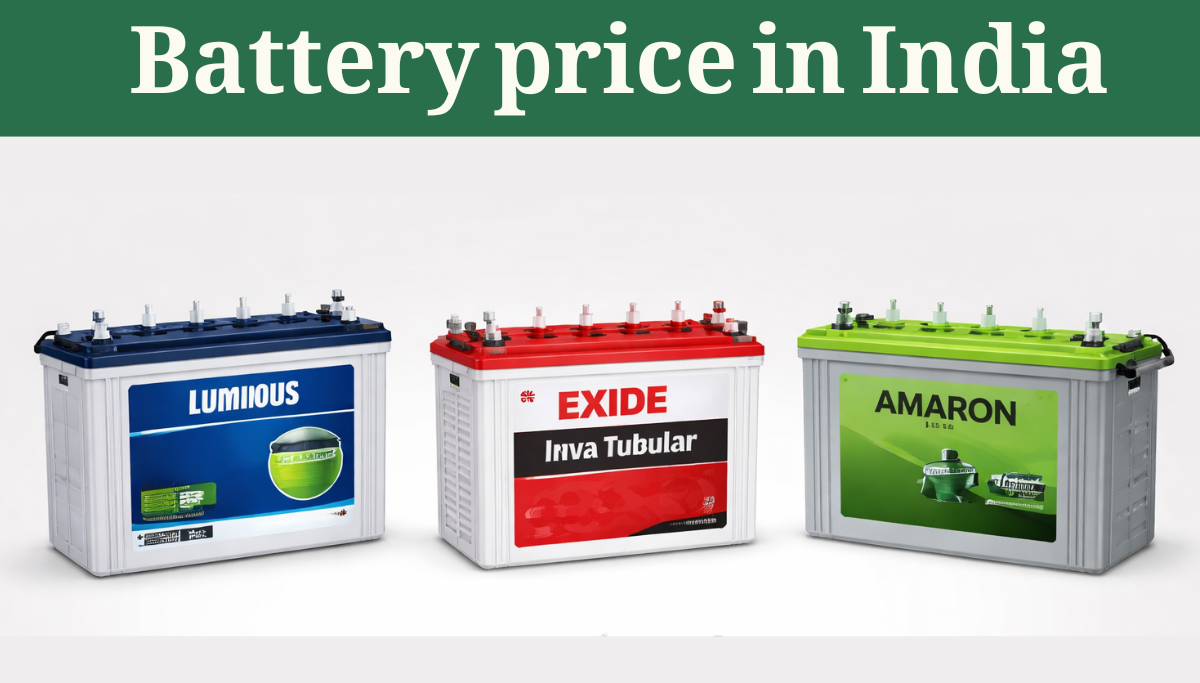
Bottom Line: Battery prices in India range from ₹4,000 for basic 80Ah units to ₹50,000 for high-capacity lithium systems, with 150Ah tubular batteries averaging ₹10,000-₹14,000 and 200Ah models around ₹16,500. Your total cost includes hidden charges like installation (₹500-₹2,000) and disposal fees (₹200-₹500).
Getting caught off-guard by battery prices? You’re not alone. Walk into any dealer, and you’ll face a maze of confusing specs, shifting prices, and hidden costs that make budgeting nearly impossible.
The frustration builds when dealers quote different prices for identical batteries. One minute a 150Ah battery costs ₹12,000, the next it’s ₹15,000 somewhere else. Add installation charges, warranty variations, and unclear backup times—suddenly your “simple” battery purchase becomes a headache.
You want straight answers. Clear pricing. Transparent costs. Most importantly, you want to know you’re getting value for your money without nasty surprises at checkout.
Introduction & Market Overview
Indian Battery Market Size & Growth (2025-2030)
India’s inverter battery market is experiencing robust growth, with trusted brands like Luminous, Exide, and Amaron dominating the landscape. The market’s expansion is driven by frequent power cuts, increasing consumer awareness, and growing demand for reliable backup solutions.
The shift towards maintenance-free batteries has reshaped pricing structures. Traditional lead-acid batteries compete with emerging lithium technologies, creating distinct price segments for different user needs.
Types of Batteries Available in India
Lead-Acid Tubular Batteries: The workhorses of Indian homes. These tall, robust units offer reliable backup and typically last 4-5 years with proper maintenance.
Flat Plate Batteries: Budget-friendly options for light usage. They’re shorter in height but require more frequent replacement every 2-3 years.
Lithium-Ion Batteries: Premium solutions starting from ₹1,08,000, offering zero maintenance and faster charging compared to traditional lead-acid alternatives.
Factors Affecting Battery Prices in 2025
Raw material costs heavily influence pricing. Lead prices fluctuate with global market conditions, while lithium costs remain volatile due to supply chain constraints.
Government policies on import duties directly impact final retail prices. GST rates, environmental compliance costs, and transportation charges add layers to the pricing structure.
Brand reputation commands premium pricing. Established names like Exide and Luminous charge 10-15% more than emerging brands for similar specifications.
Battery Price Categories
Inverter Battery Prices by Capacity
80Ah to 120Ah Battery Price Range
| Brand | Model | Capacity | Price Range | Warranty |
| Microtek | EB1900TT | 100Ah | ₹6,500-₹8,000 | 24 months |
| V-Guard | VJ145 | 100Ah | ₹7,200-₹8,500 | 30 months |
| Genus | Hallabol GTT120 | 120Ah | ₹8,000-₹9,500 | 36 months |
Entry-level batteries suit small homes with minimal power requirements. They’re perfect for running 2-3 fans, LED lights, and basic electronics during outages.
150Ah to 200Ah Battery Price Range
| Brand | Model | Capacity | Price Range | Warranty |
| Luminous | RC18000ST | 150Ah | ₹11,000-₹13,500 | 48 months |
| Exide | Insta Brite | 150Ah | ₹10,500-₹12,800 | 42 months |
| Amaron | AR150TT | 150Ah | ₹10,899-₹12,500 | 48 months |
| Livguard | IT1536ST | 150Ah | ₹11,200-₹13,000 | 42 months |
| Luminous | RC25000 | 200Ah | ₹14,500-₹17,000 | 60 months |
| Lento | Tubular 200Ah | 200Ah | ₹16,500 | 48 months |
The 150Ah segment represents the sweet spot for most Indian households, with prices ranging between ₹10,000 to ₹14,000 depending on the brand. These batteries provide 4-6 hours backup for typical home loads.
Most popular choice: 150Ah tubular batteries balance cost and performance perfectly. They handle moderate loads like fans, lights, TV, and refrigerator without breaking your budget.
220Ah+ High Capacity Battery Prices
| Brand | Model | Capacity | Price Range | Backup Time |
| Exide | PowerSafe Plus | 220Ah | ₹18,500-₹21,000 | 6-8 hours |
| Luminous | RedCharge | 230Ah | ₹19,000-₹22,500 | 7-9 hours |
| Amaron | Hi-Way | 250Ah | ₹21,000-₹24,500 | 8-10 hours |
High-capacity batteries cater to larger homes or commercial setups. They’re ideal when you need extended backup or run power-hungry appliances like refrigerators and air coolers.
Lithium-Ion Battery Prices
Home Energy Storage Systems (1kWh-10kWh)
| Capacity | Brand | Price Range | Lifespan | ROI Period |
| 2.5kWh | Loom Solar | ₹1,25,000-₹1,40,000 | 10+ years | 6-7 years |
| 5kWh | UTL Solar | ₹2,20,000-₹2,50,000 | 10+ years | 5-6 years |
| 10kWh | Various | ₹4,00,000-₹4,80,000 | 12+ years | 7-8 years |
Lithium battery costs start from Rs. 25,000 to 30,000 per kilowatt-hour, making them significantly more expensive upfront but offering superior long-term value.
The math works differently with lithium. Higher upfront costs get offset by longer life, zero maintenance, and better efficiency over 10+ years.
Commercial Lithium Battery Solutions
Large-scale commercial systems require custom pricing. Factors include installation complexity, backup requirements, and integration with existing infrastructure.
Typical commercial setups range from ₹50,000 to ₹5,00,000 depending on capacity and application requirements.
Automotive Battery Prices
Car Battery Price Range
| Vehicle Type | Capacity Range | Price Range | Popular Brands |
| Small Cars | 35-45Ah | ₹3,500-₹5,500 | Amaron, Exide |
| Sedans/SUVs | 55-75Ah | ₹5,500-₹8,500 | Amaron Pro, Exide Matrix |
| Luxury Cars | 80-100Ah | ₹8,500-₹12,000 | Exide Epiq, Amaron Hi-Way |
Amaron batteries command premium pricing with warranties up to 48 months, while Exide offers competitive pricing with 36-month coverage.
“Looking beyond home batteries? See our detailed KIA cars price in India guide, as modern vehicles increasingly depend on advanced battery technology for optimal performance.”
Two-Wheeler Battery Prices
| Vehicle Type | Typical Capacity | Price Range | Maintenance |
| Motorcycles | 2.5-5Ah | ₹800-₹1,800 | Low |
| Scooters | 5-7Ah | ₹1,200-₹2,200 | Minimal |
| Premium Bikes | 7-12Ah | ₹2,000-₹3,500 | Very Low |
Two-wheeler batteries offer excellent value with minimal maintenance requirements. Most last 2-3 years under normal usage conditions.
EV Battery Replacement Costs
Electric vehicle battery costs vary significantly based on capacity, with 1kWh systems starting around ₹25,000 and larger 10kWh systems reaching ₹4,80,000.
EV battery replacement remains expensive, but costs are dropping 10-15% annually as technology improves and production scales up.
Brand-Wise Price Analysis
Exide Battery Price List 2025
Market Position: Premium segment leader with 70+ years legacy Price Premium: 5-10% above market average Warranty Advantage: Industry-leading service network
| Model Series | Capacity Options | Price Range | Key Features |
| Insta Brite | 100Ah-200Ah | ₹8,500-₹17,000 | Fast charging, low maintenance |
| Matrix Red | 35Ah-75Ah (Auto) | ₹4,200-₹7,800 | High cranking power |
| PowerSafe Plus | 150Ah-220Ah | ₹12,000-₹21,000 | Industrial grade, long life |
Exide Industries Limited remains India’s largest selling battery company with comprehensive warranty coverage and nationwide service support.
“For agricultural applications requiring reliable power backup, explore John Deere tractor prices to understand complete farm electrification costs including battery systems.”
Luminous Battery Price Guide
Market Position: Value leader with strong rural presence Price Advantage: Competitive pricing across all segments Technology Focus: Advanced tubular technology
| Series | Models | Capacity | Price Band | USP |
| RedCharge | RC15000-RC25000 | 120Ah-200Ah | ₹9,000-₹17,000 | Quick charging |
| ILTT Series | 18048N-26060 | 150Ah-220Ah | ₹11,000-₹20,000 | Long backup |
| Inverter Combo | Various | 100Ah-180Ah | ₹15,000-₹35,000 | Complete solution |
Luminous batteries are known for excellent value, great performance, and long service life with warranties extending up to 5 years.
Rural availability gives Luminous an edge. Their extensive dealer network ensures easy access and prompt service even in remote areas.
Amaron Battery Pricing
Market Position: Premium maintenance-free segment Technology Edge: SilvenX alloy, zero maintenance Warranty: Industry-best coverage
| Application | Model Range | Capacity | Pricing | Maintenance |
| Inverter | AR Series | 100Ah-200Ah | ₹9,500-₹18,500 | Zero |
| Automotive | Pro Series | 35Ah-100Ah | ₹3,800-₹12,000 | Minimal |
| Commercial | Hi-Way | 180Ah-250Ah | ₹16,000-₹24,500 | Very Low |
Amaron batteries are factory-charged and offer hassle-free usage with fast recharge capabilities, justifying their premium pricing.
Microtek Battery Cost Analysis
Market Position: Budget-friendly with decent performance Target Audience: Cost-conscious consumers Value Proposition: Affordable reliability
| Category | Popular Models | Price Range | Warranty Period |
| Entry Level | EB Series | ₹6,500-₹10,000 | 24-30 months |
| Mid Range | MtekPower | ₹8,000-₹14,000 | 30-36 months |
| Premium | TubeMaster | ₹12,000-₹18,000 | 36-42 months |
Microtek offers reliable inverter batteries at competitive prices, making them ideal for budget-conscious buyers seeking good performance.
Okaya Battery Price Range
Market Position: Emerging player with aggressive pricing Growth Strategy: Quality at competitive rates Focus Areas: Residential and small commercial
Okaya batteries compete directly with established brands by offering similar features at 10-15% lower prices. Their tubular technology matches industry standards while maintaining affordability.
Su-Kam Battery Pricing
Market Position: Solar and inverter specialist Unique Selling Point: Solar-optimized batteries Price Strategy: Premium for specialized applications
Su-Kam focuses on renewable energy applications. Their batteries are specifically designed for solar setups, commanding premium pricing in the solar segment.
Livguard Battery Cost Guide
Market Position: Fast-growing brand with modern approach Technology Focus: Advanced safety features Market Strategy: Value-based pricing
| Product Line | Capacity Range | Price Segment | Target Market |
| InverTuff | 120Ah-200Ah | Mid-premium | Urban homes |
| PowerBright | 100Ah-150Ah | Budget-mid | Small businesses |
| TubeMaster | 150Ah-220Ah | Premium | Large homes |
Livguard batteries feature modern design, long backup, and high customer satisfaction with competitive pricing in the mid-premium segment.
“Planning a complete renewable energy setup?
After understanding battery costs, explore our comprehensivesolar panel price in India guide to calculate total system costs and maximize your clean energy investment.”
Technology-Based Price Comparison
Lead-Acid vs Lithium-Ion Price Analysis
Upfront Cost Comparison:
- Lead-acid 150Ah: ₹10,000-₹14,000
- Lithium 150Ah equivalent: ₹45,000-₹60,000
Lifecycle Cost Analysis (10 years):
- Lead-acid: ₹30,000-₹40,000 (including 2-3 replacements)
- Lithium: ₹50,000-₹65,000 (single unit)
The crossover point occurs around year 6-7 when lithium’s longer life compensates for higher upfront costs.
Tubular vs Flat Plate Battery Costs
| Feature | Tubular | Flat Plate | Price Difference |
| Initial Cost | ₹12,000 (150Ah) | ₹8,500 (150Ah) | +30-40% |
| Lifespan | 4-5 years | 2-3 years | Better value |
| Maintenance | Low | Moderate | Lower ongoing costs |
| Backup Time | Superior | Adequate | 15-20% more backup |
Tubular batteries offer 8+ years operational life with sophisticated design and require little maintenance, making them more cost-effective long-term despite higher upfront costs.
Choose tubular for reliability. The extra cost pays dividends through longer life and better performance.
SMF vs Wet Battery Price Difference
Sealed Maintenance-Free (SMF):
- Price premium: 15-25% over wet batteries
- Zero maintenance requirements
- Suitable for areas with limited service access
Wet/Flooded Batteries:
- Lower initial cost
- Regular maintenance needed
- Better for areas with reliable service support
SMF batteries justify their premium through convenience and reliability, especially in urban apartments where maintenance access is challenging.
Solar Battery Price Comparison
Solar-specific batteries cost 10-20% more than regular inverter batteries due to enhanced cycling capabilities and solar charge controller compatibility.
| Type | Regular Inverter | Solar Optimized | Price Premium |
| 150Ah Lead-acid | ₹11,000 | ₹13,000 | +18% |
| 200Ah Lead-acid | ₹16,500 | ₹19,500 | +18% |
| Lithium 5kWh | ₹2,20,000 | ₹2,50,000 | +14% |
Solar batteries offer deeper discharge cycles and faster charging, making the premium worthwhile for renewable energy setups.
Regional Price Variations
Metro Cities Battery Prices (Delhi, Mumbai, Bangalore)
Delhi: Competitive pricing due to high dealer density
- 150Ah tubular: ₹10,500-₹13,000
- Installation charges: ₹500-₹800
Mumbai: Slightly higher due to space constraints
- 150Ah tubular: ₹11,000-₹13,500
- Installation charges: ₹700-₹1,000
Bangalore: Premium pricing in tech hubs
- 150Ah tubular: ₹11,200-₹14,000
- Installation charges: ₹600-₹900
Metro cities offer better service networks but command premium pricing due to higher operating costs.
Tier-2 City Pricing Analysis
Tier-2 cities like Pune, Jaipur, and Coimbatore offer balanced pricing between metro premiums and rural limitations.
Typical price ranges sit 5-10% below metro cities while maintaining good service availability. These markets offer excellent value for battery purchases.
Rural vs Urban Price Differences
Rural Areas:
- Limited dealer options
- Higher transportation costs
- Limited service availability
- Prices 10-15% higher than urban centers
Urban Centers:
- Multiple dealer competition
- Better logistics
- Comprehensive service networks
- Competitive pricing
Rural buyers face fewer choices but often get better after-sales relationships with local dealers.
State-wise Price Variations & Taxes
GST rates remain uniform across states, but local taxes and transportation costs create variations:
High-cost states: Manipur, Nagaland, Arunachal Pradesh (+15-20%) Moderate-cost states: Most mainland states (baseline pricing) Low-cost states: Gujarat, Tamil Nadu, Karnataka (-5 to -10%)
Manufacturing hub proximity significantly impacts final pricing due to reduced logistics costs.
Total Cost of Ownership Analysis
Battery Purchase Cost Breakdown
Base Battery Cost: 75-80% of total expense GST (18%): Mandatory tax component Transportation: ₹200-₹800 depending on distance Dealer Margin: Built into quoted price
Installation & Setup Charges
| Service Type | Cost Range | What’s Included |
| Basic Installation | ₹500-₹800 | Cable connection, basic setup |
| Standard Installation | ₹800-₹1,200 | Wiring, safety setup, testing |
| Premium Installation | ₹1,200-₹2,000 | Complete wiring, circuit protection |
| Commercial Setup | ₹2,000-₹5,000 | Professional installation, documentation |
Never skip professional installation. Poor setup can reduce battery life by 30-40% and void warranty coverage.
Maintenance Cost Over Lifetime
Lead-acid Tubular (4-year life):
- Annual maintenance: ₹300-₹500
- Water top-ups: ₹50-₹100/year
- Terminal cleaning: ₹100-₹200/year
- Total 4-year maintenance: ₹1,800-₹3,200
Lithium-ion (10-year life):
- Annual maintenance: ₹0-₹100
- System checks: ₹200-₹300/year
- Total 10-year maintenance: ₹200-₹3,000
Lithium’s maintenance advantage becomes significant over extended periods.
Replacement & Disposal Costs
Battery Disposal:
- Old battery value: ₹800-₹1,500 (lead recycling)
- Environmental fee: ₹200-₹500
- Transportation: ₹100-₹300
Replacement Benefits:
- Exchange value reduces new battery cost by ₹1,000-₹2,000
- Most dealers offer old battery pickup services
- Proper disposal prevents environmental penalties
Factor in disposal costs when calculating true replacement expenses.
Buying Guide & Price Optimization
Best Time to Buy Batteries (Seasonal Pricing)
Festival Seasons (Diwali, Dussehra): Expect 5-10% discounts Summer Peak (April-June): Highest demand, premium pricing Monsoon Period (July-September): Stable pricing, good availability Winter Months (December-February): Best deals, 10-15% discounts
Time your purchase right. Winter months offer maximum savings when demand drops and dealers clear inventory.
Online vs Offline Price Comparison
Online Advantages:
- Price transparency
- Easy comparison
- Customer reviews
- Bulk discounts
Offline Benefits:
- Physical inspection
- Immediate installation
- Local service relationships
- Negotiation opportunities
Price Differences:
- Online: 5-10% cheaper base prices
- Offline: Better installation and service packages
Hybrid approach works best—research online, buy offline for complex installations.
Bulk Purchase Discounts
| Quantity | Discount Range | Typical Applications |
| 2-5 units | 3-5% | Large homes, small businesses |
| 6-10 units | 5-8% | Housing societies, offices |
| 11-25 units | 8-12% | Commercial buildings |
| 25+ units | 12-20% | Industrial, bulk dealers |
Group buying with neighbors can unlock significant savings. Housing societies often negotiate 10-15% discounts for bulk purchases.
Government Subsidies & Incentives
Solar Battery Subsidies:
- Central government: Up to 40% subsidy for solar systems including batteries
- State subsidies: Additional 10-20% in select states
- MNRE schemes: Specific programs for rural and remote areas
Commercial Incentives:
- Accelerated depreciation for business batteries
- GST input credit for registered businesses
- Export incentives for battery manufacturers
Research applicable subsidies before purchase. Solar installations with batteries qualify for substantial government support.
Price Prediction & Market Trends
Battery Price Trends (2020-2025)
Historical Trends:
- 2020-2022: Prices increased 15-20% due to raw material costs
- 2022-2024: Stabilization with 5-8% annual increases
- 2024-2025: Lithium prices dropping, lead-acid stable
Key Price Drivers:
- Global lead prices
- Lithium supply chain improvements
- Manufacturing capacity expansion
- Technology advancement
Future Price Predictions (2026-2030)
Lead-acid Batteries:
- Expected 3-5% annual price increases
- Technology maturity limiting cost reductions
- Raw material costs driving pricing
Lithium-ion Batteries:
- 10-15% annual price reductions expected
- Improved manufacturing scale
- Technology advancement driving efficiency
Market Shift Prediction:
- Lithium adoption reaching 25% by 2030
- Lead-acid maintaining dominance in budget segment
- Hybrid technologies emerging in mid-range
Impact of Raw Material Costs
Lead Prices:
- Global lead market volatility affects 40-50% of battery cost
- Mining capacity limitations
- Environmental regulations increasing costs
Lithium Prices:
- High volatility in current market
- New mining projects coming online 2025-2027
- Technology improvements reducing lithium requirements
Track commodity prices if you’re planning major battery investments. Raw material trends directly impact retail pricing.
Technology Advancement Impact on Pricing
Emerging Technologies:
- Sodium-ion batteries entering market
- Advanced lead-acid formulations
- Hybrid battery technologies
Manufacturing Improvements:
- Automated production reducing labor costs
- Better quality control reducing defects
- Scale economics improving efficiency
Technology advancement will continue driving lithium prices down while maintaining lead-acid stability.
Interactive Tools & Calculators
Battery Capacity Calculator
Formula: Required Capacity (Ah) = (Total Load in Watts × Backup Hours) ÷ (Battery Voltage × Efficiency Factor)
Example Calculation:
- Load: 400 watts (2 fans, 4 LED lights, 1 TV)
- Backup needed: 4 hours
- Battery voltage: 12V
- Efficiency: 0.8
- Required capacity: (400 × 4) ÷ (12 × 0.8) = 167Ah
Choose 180Ah or 200Ah battery for this requirement.
Backup Time Calculator
Formula: Backup Time = (Battery Capacity × Voltage × Efficiency) ÷ Total Load
Quick Reference Table:
| Battery Capacity | 200W Load | 400W Load | 600W Load |
| 100Ah | 4.8 hours | 2.4 hours | 1.6 hours |
| 150Ah | 7.2 hours | 3.6 hours | 2.4 hours |
| 200Ah | 9.6 hours | 4.8 hours | 3.2 hours |
This assumes 12V battery with 80% efficiency factor.
ROI Calculator (Battery vs Generator)
10-Year Cost Comparison:
Battery System (150Ah + 1000VA Inverter):
- Initial cost: ₹25,000
- Replacement (Year 5): ₹12,000
- Maintenance: ₹2,000
- Total: ₹39,000
Generator (3kVA):
- Initial cost: ₹35,000
- Fuel (₹150/month): ₹18,000
- Maintenance: ₹8,000
- Total: ₹61,000
Battery systems save ₹22,000 over 10 years while providing silent, automatic operation.
EMI Calculator for Battery Purchase
EMI Options:
| Loan Amount | 12 Months | 24 Months | 36 Months |
| ₹15,000 | ₹1,350 | ₹720 | ₹510 |
| ₹25,000 | ₹2,250 | ₹1,200 | ₹850 |
| ₹50,000 | ₹4,500 | ₹2,400 | ₹1,700 |
Interest rates: 12-18% annually depending on credit score and lender
Many battery dealers offer 0% EMI schemes during festive seasons, making premium batteries more affordable.
FAQ & Expert Advice
Frequently Asked Questions About Battery Prices
Expert Tips for Getting Best Battery Deals
Negotiate Smartly: Always ask for installation inclusion, extended warranty, and old battery exchange value. Dealers have flexibility on total package pricing even when battery prices are fixed.
Time Your Purchase: Winter months (December-February) offer best deals when demand drops. Avoid summer peak season unless emergency replacement is needed.
Compare Total Cost: Don’t just compare battery prices. Include installation, warranty terms, service quality, and dealer reputation in your decision matrix.
Bulk Buying Power: Group purchases with neighbors or housing societies unlock 10-15% discounts. Single building purchases often get commercial rates.
Verify Authenticity: Check manufacturing dates, serial numbers, and warranty cards. Recent manufacturing (within 3 months) ensures fresh batteries with full lifecycle ahead.
Service Network Matters: Choose brands with strong local service presence. The cheapest battery becomes expensive if service support is poor or unavailable.
Read Fine Print: Understand warranty terms—flat vs pro-rata, replacement vs repair coverage, and exclusions. Some warranties void with improper installation or maintenance.
Future-Proof Your Choice: Consider your growing power needs. It’s often better to buy slightly higher capacity now than replace undersized batteries in 2-3 years.


