
UPS Price in Pakistan: Complete Guide 2025

UPS prices in Pakistan range fromRs. 12,000 for basic650VA units toRs. 580,000 for advanced solar hybrid systems. The average home UPS (1000–1500VA) costs between Rs. 25,000–65,000, while commercial units (3000VA+) start from Rs. 100,000. Pricing depends on the brand, technology, battery inclusion, and features like pure sine wave output or solar compatibility. If you’re comparing home power solutions, lighting expenses also matter—especially energy-efficient options. For this, you can also check out our detailed guide on LED price in Pakistan to get a clear idea of budget-friendly lighting choices.
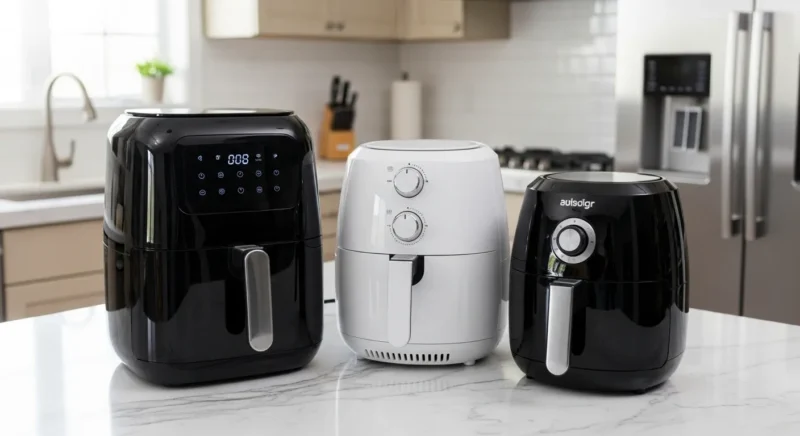
Air Fryer Price in Pakistan
Air fryer prices in Pakistan range from Rs 19,200 to Rs 98,400, with most quality models falling between Rs 25,000 to Rs 70,000. Top brands like Philips, Dawlance, and Westpoint offer models across all price segments, with features ranging from...
Introduction
We’ve all been there. You’re working on something important when the lights go out. Your PC shuts down instantly, taking hours of unsaved work with it. Sound familiar?
Welcome to life in Pakistan, where power outages aren’t just inconveniences—they’re daily battles. UPS prices in Pakistan vary based on brand, power capacity, technology, and battery pairing, making it tough to find the right solution without breaking the bank.
Here’s the problem: the sticker price keeps shifting every week. No one can tell you today what a 1kVA UPS will cost tomorrow. Sellers add hidden charges for battery cables, installation fees, and “delivery costs” that bump the real price 20-30% higher than advertised. You’ll find the same model quoted with a 5,000 PKR difference between two shops just blocks apart.
Then there’s seasonal pricing madness. Load-shedding peaks drive demand through the roof. Buy in May, regret it in June when prices drop. Stores push bundles you don’t need when all you want is a basic unit for your Wi-Fi router.
Most frustrating? Online specs tell you nothing useful. Will that 650VA unit actually run your PC and monitor? Good luck figuring that out from vague product descriptions.
What you really want is simple: A clear, honest price list updated regularly. One final figure with no surprise charges. Quick sizing advice like “For a 32-inch LED + Wi-Fi router, pick 600VA.” At least a one-year warranty with a service center that actually answers the phone.
We’re here to cut through the confusion. This guide gives you exact prices, brand comparisons, and practical buying advice. No fluff, just the facts you need to make the right choice.
What is UPS and why pricing matters in Pakistan
A UPS (Uninterruptible Power Supply) is your electrical safety net. When the grid fails, it kicks in instantly—we’re talking milliseconds, not minutes like generators.
Think of it as a smart battery with brains. It constantly monitors power quality and switches to backup mode when voltage drops, spikes, or disappears entirely. Your devices keep running like nothing happened.
Why pricing matters in our market:
Pakistan’s power infrastructure makes UPS systems essential, not optional. These eco-friendly electronic household appliances have replaced harmful generators in most homes and offices. Unlike generators, they’re silent, instant, and don’t pump out toxic fumes.
Our unique challenges drive specific pricing patterns:
- Load-shedding frequency varies by region. Urban areas see 4-6 hour daily outages, rural areas face up to 12 hours. This directly impacts what capacity people buy and how much they’re willing to spend.
- Voltage instability is another factor. Pakistani power grids deliver inconsistent voltage, making automatic voltage regulation (AVR) features crucial. Basic units without AVR often fail within months.
- Import duties and taxes significantly affect pricing. Most UPS components are imported, making exchange rate fluctuations directly impact retail prices.
- The real kicker? Battery replacement costs. Many buyers focus only on UPS prices, ignoring that batteries need replacement every 2-3 years. A Rs. 25,000 UPS might need Rs. 15,000 worth of new batteries down the line.
- Understanding these factors helps you budget realistically and avoid costly mistakes.
UPS Types Available in Pakistan
Offline / Mini UPS (650 VA – 1500 VA)
Price Range: Rs. 12,000 – Rs. 50,000
Offline UPS units are the workhorses of Pakistani homes. They’re basic but reliable for essential loads like computers, routers, and LED lights.
How they work: Normally, your devices run on grid power. When electricity fails, the UPS switches to battery mode. There’s a brief 2-4 millisecond gap during switching—barely noticeable for most equipment.
Popular models and prices:
| Brand | Model | Capacity | Price (PKR) | Features |
| Stabimatic | Gemini 650VA | 650VA/390W | 12,460 | 3-Step AVR, LCD Display |
| APC | Back-UPS 650VA | 650VA/325W | 27,500 | Energy saving, AVR |
| Crown Micro | 1000VA | 1000VA/600W | 22,500 | Wide input range |
Best for: Home computers, Wi-Fi routers, LED TVs, small fans. If you’re running 1-2 devices during outages, this category covers you perfectly.
Not suitable for: Refrigerators, air conditioners, or any motor-based appliances. The switching delay can cause sensitive medical equipment to reset.
Line-Interactive UPS
Price Range: Rs. 25,000 – Rs. 80,000
These are the sweet spot for most Pakistani households. Line-interactive models include built-in voltage regulation, handling our grid’s constant fluctuations without switching to battery.
Key advantage: When voltage drops to 180V or spikes to 260V, the UPS corrects it automatically. Your devices get clean, stable 220V power without draining the battery.
Representative pricing:
| Capacity | Price Range | Backup Time* | Suitable Load |
| 1000VA | Rs. 28,000-45,000 | 15-30 minutes | PC + monitor + router |
| 1500VA | Rs. 38,000-65,000 | 20-45 minutes | PC + LED TV + 2 fans |
| 2000VA | Rs. 50,000-80,000 | 30-60 minutes | Multiple devices |
*Backup time with standard 12V 100Ah battery
Online / Double-Conversion UPS (1000 VA – 3000 VA+)
Price Range: Rs. 80,000 – Rs. 400,000
Online UPS systems are the premium choice. They continuously convert AC power to DC, then back to AC. Your devices never actually run on grid power—they always get perfectly clean electricity.
Zero switching time means seamless protection for sensitive equipment. Medical devices, servers, and critical business systems rely on this technology.
Sample pricing for online units:
| Model | Capacity | Price (PKR) | Application |
| Inforise Moonlight Mini | 1000VA | 330,000 | Server rooms |
| Euromak EOL-10000VA | 10000VA | 368,120 | Commercial |
| Generic Online 3000VA | 3000VA | 180,000-220,000 | Small office |
The price jump is significant, but so is the protection level.
Hybrid Solar UPS (3000 VA – 5000 VA+)
Price Range: Rs. 150,000 – Rs. 580,000
Solar hybrid systems combine UPS functionality with solar charging. During the day, solar panels charge batteries and power loads. At night or on cloudy days, they work like regular UPS units.
Popular solar hybrid options:
| Brand | Model | Capacity | Price (PKR) | Solar Input |
| Homage | HVS-1214-SCC | 1200VA/1000W | 65,500 | 1000W MPPT |
| Simtek | SIMREX DUAL | 6000W/48V | 178,000 | Advanced MPPT |
| Stabimatic | 12KW IP65 | 12000W | 580,000 | Three Phase |
Price Range Overview
Let’s break down UPS pricing by real-world usage scenarios. These ranges reflect current Pakistani market rates as of July 2025:
Budget Category (Rs. 12,000 – Rs. 30,000)
Perfect for: Basic home use, students, small shops
- 650VA – 1000VA capacity
- Modified sine wave output
- 15-20 minute backup time
- Basic AVR protection
Popular choices include Stabimatic Gemini series and local assembled units. Don’t expect premium features, but they’ll keep your computer and router running during short outages.
Mid-Range Category (Rs. 30,000 – Rs. 80,000)
Best for: Family homes, small offices, reliable everyday use
- 1000VA – 2000VA capacity
- Pure sine wave options available
- 30-60 minute backup time
- Advanced AVR, LCD displays
This category covers Simtek Pure Sine Wave UPS/Inverter systems running 6 fans and 6 lights simultaneously. You get better build quality, longer warranties, and features like RS232 communication.
Premium Category (Rs. 80,000 – Rs. 200,000)
Ideal for: Serious home setups, medium businesses
- 2000VA – 5000VA capacity
- Online or line-interactive technology
- 1-3 hour backup time
- Microprocessor control, advanced protection
Commercial/Solar Category (Rs. 200,000+)
For: Large homes, offices, solar installations
- 5000VA+ capacity
- Solar hybrid functionality
- 3+ hour backup time
- Three-phase options, MPPT solar charging
Warranty & After-Sales Support
Warranty Coverage
Standard Warranty:
- 3 years comprehensive coverage
- 2 years on electrical components
- 1 year on accessories (remote, brackets)
What’s Covered:
- Motor replacement
- Electrical faults
- Manufacturing defects
What’s Not Covered:
- Normal wear and tear.
- Physical damage
- Misuse or negligence
Spare Parts Availability
Spare capacitor costs Rs 800 and no shop in my city keeps it. GFC maintains inventory at authorized service centers.
Common Spare Parts:
- Motor bearings: Rs 400
- Capacitor: Rs 800
- Remote control: Rs 650
- Blade set: Rs 1,200
Service Centers
Major Cities Service Network:
- Karachi: 15 authorized centers
- Lahore: 12 service points
- Islamabad: 8 locations
- Faisalabad: 6 centers
- Response time averages 24-48 hours for in-warranty repairs
How to Choose the Right GFC Fan
Room Size vs Fan Capacity
Room Size Guidelines:
- 8×10 feet: 42-48 inch fans
- 10×12 feet: 48-52 inch fans
- 12×15 feet: 52-56 inch fans
- 15×20 feet: 56+ inch fans
Quick checklist: which GFC model works best with UPS during load-shedding. Look for AC/DC compatibility and low power consumption (30-45W).
Power Consumption Analysis
Inverter fans paying Rs 2,160 annually versus Rs 5,760 for standard fans recover their higher price within 2-3 years. Real watts-to-rupees chart so you know the monthly bill before you hang the fan.
| Fan Type | Power (Watts) | Daily Usage | Monthly Cost* |
| Standard | 75W | 12 hours | Rs 540 |
| Inverter | 30W | 12 hours | Rs 216 |
| AC/DC | 45W | 12 hours | Rs 324 |
*Based on Rs 20/unit electricity rate
Budget vs Features
Budget-Conscious (Rs 9,000-12,000):
- GFC Awami series
- Basic copper motor
- 2-year warranty
Mid-Range (Rs 12,000-18,000):
- GFC Deluxe series
- Better build quality
- 3-year warranty
Premium (Rs 18,000-23,000):
- Energy efficiency
- GFC Fanoos series
- Advanced features
UPS Compatibility
Load-Shedding Considerations:
- Choose 30W inverter models
- Ensure AC/DC compatibility
- Check UPS capacity requirements
Most home UPS systems handle 30-45W fans easily. Higher wattage models drain batteries faster.
Price Trends & Best Deals
Seasonal sales in Pakistan
Fan prices drop 10-15% during winter months (November-February) but selection becomes limited. Pre-summer sales (March-April) offer better variety with 5-10% discounts.
July is peak season with highest prices. August onwards sees clearance sales as demand drops. September-October offers 15-20% discounts.
Ramadan and Eid sales provide genuine discounts. Independence Day (August 14) brings patriotic-themed promotions.
Comparing price-per-watt and value metrics
Price-per-watt analysis reveals true value: Rs 120-150/watt for standard fans, Rs 200-300/watt for energy-savers, and Rs 400-600/watt for premium inverters.
- Value isn’t just about initial cost. Consider:
- Resale value
- Annual electricity cost
- Replacement frequency
- Repair costs
Conclusion
SGFC fans offer reliable cooling solutions across all price ranges. The Awami series serves budget-conscious buyers at Rs 9,000, while the Fanoos lineup provides premium features at Rs 23,000.
Choose inverter models for energy savings and UPS compatibility. Factor in installation costs and warranty coverage when making your decision.
A December 2025 list of every GFC ceiling, pedestal, and bracket fan shows clear price tiers. Side-by-side cost comparison helps you choose the right model for your needs and budget.


