
Vaisakhi Sangrand 2026: Date, Khalsa & Harvest Meaning
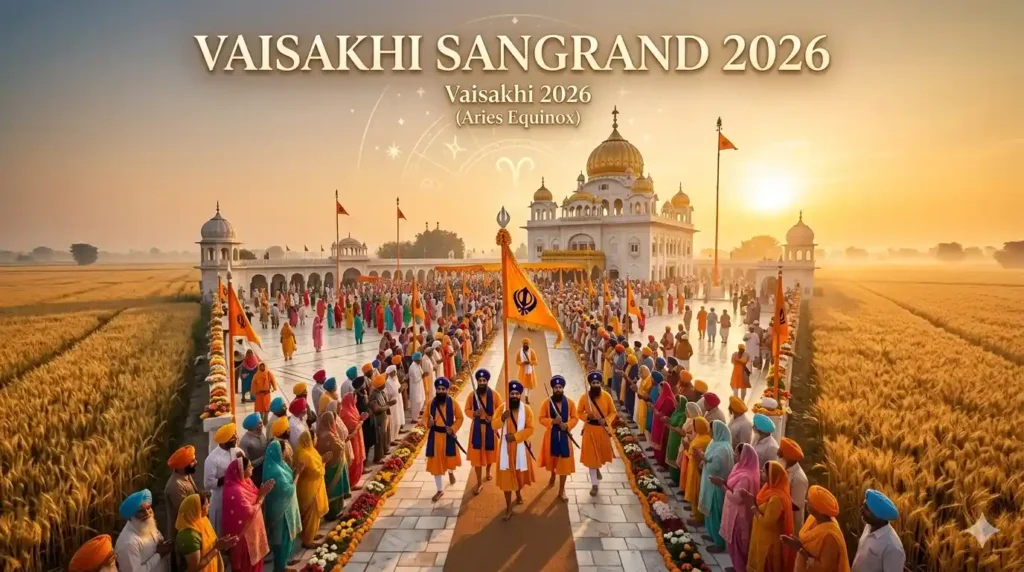
Vaisakhi Sangrand 2026 falls on Tuesday, 14 April 2026 — 1 Vaisakh, Bikrami Samvat 2083. It marks the sun’s entry into Mesha Rasi (Aries), the Mesha Sankranti, and is the first day of the Desi month of Vaisakh. Of all twelve Sangrands in the Desi calendar, Vaisakhi Sangrand carries the greatest weight in Sikhism — it is Khalsa Sirjana Divas, the anniversary of the day Guru Gobind Singh Ji founded the Khalsa Panth at Anandpur Sahib on 13 April 1699.
For farmers across Pakistani Punjab, this same Sangrand signals the peak wheat harvest — golden fields ready for the combine, the Rabi season reaching its close. In one date, the Desi calendar holds three simultaneous meanings: a solar transition, a religious founding, and an agricultural milestone — which is precisely why Vaisakhi Sangrand is searched, observed, and celebrated more than any other Sangrand of the year.
Vaisakhi Sangrand 2026 — Exact Date and Gregorian Equivalent
Vaisakh Sangrand 2026
| Gregorian Date | 14 April 2026 |
|---|---|
| Day | Tuesday |
| Desi Date | 1 Vaisakh |
| اردو | ویساکھ سنگرانڈ |
| Season | Spring |
| Days Away | 7 days from today |
Why Vaisakhi Sangrand Is the Most Important Sangrand ?
What is Vaisakhi?
Vaisakhi (also spelled Baisakhi) is a significant festival in the Sikh calendar. It falls on the first day of the Vaisakh month (Sangrand), usually around April 13th or 14th. Traditionally celebrated as a regional harvest festival in Punjab, it was transformed into a profoundly religious event in 1699, marking the birth of the Khalsa Panth by Guru Gobind Singh Ji.
The Birth of the Khalsa
At Anandpur Sahib, Guru Gobind Singh created the Pure Ones (Khalsa) to uphold righteousness, fight tyranny and injustice. The Panj Piare (Beloved Five) Daya Singh, Dharam Singh, Himmat Singh, Mokham Singh, Sahib Singh agreed to give their lives when asked. The Guru initiated them, creating a new baptismal ceremony called Amrit Sanchar, using a sword-stirred mix of sugar and water named Amrit.
Saint-Soldier Transformation
This Transformation created Saint-Soldiers (Sant-Sipahi), individuals who combine spiritual devotion with courage to protect the innocent. Their Identity and Appearance became distinctive, including the Five Ks (Kesh, Kara, Kanga, Kachhehra, Kirpan). Initiated Sikhs were given this look. Men were named Singh (lion), women became Kaur (princess).
Celebrations and Calendar
Vaisakhi Celebrations are marked by Nagar Kirtan (processions), kirtan (hymns), community meals (langar), and raising the Nishan Sahib (flag). In the Nanakshahi Calendar, Vaisakhi falls on April 14, a time for spiritual gathering, gratitude, and commemorating the creation of the Khalsa. This Connection between harvest and faith marks the start of the harvest season in Punjab.
Vaisakhi Sangrand — Peak Harvest Season in Pakistan
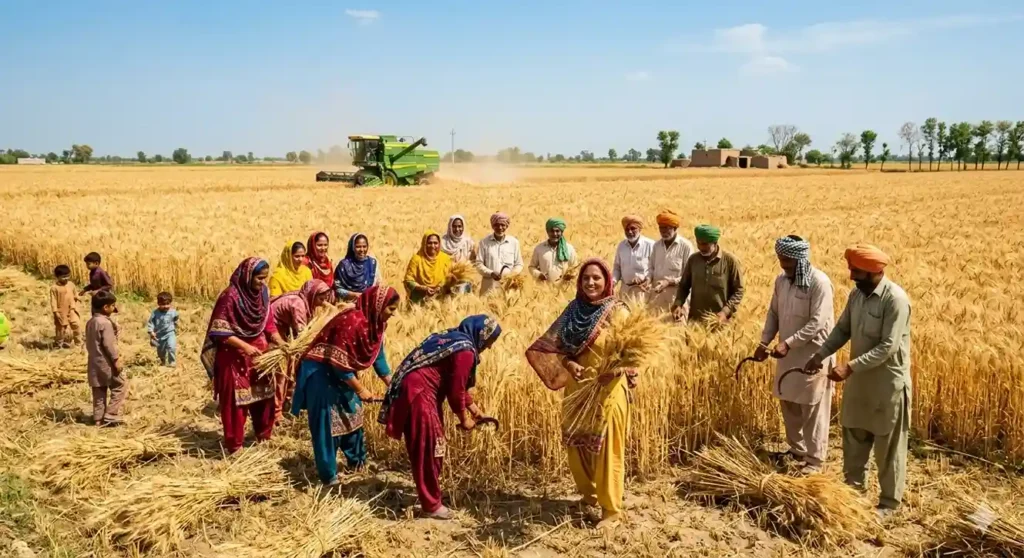
Vaisakhi is the major harvest time in the Punjabi agricultural calendar. This period acts as a transition point between winter and summer harvests, marking the Rabi harvest season. On this day, farmers begin preparing for the wheat harvest, offering thanksgiving for crops before they are taken to markets. Across Pakistan, local fairs (melas) celebrate the newly harvested wheat as a traditional festival. Region, Customs, and celebrations define this Harvest Significance. Historically, Sikh pilgrims from across the world travel to Gurdwaras in Nankana Sahib and Hassan Abdal to celebrate Vaisakhi. This Cultural Tradition is a festival of harvest, celebration, spring, summer, and Pakistan’s agricultural heritage.
Rituals, Prayers and Observances on Vaisakhi Sangrand
Vaisakhi Sangrand: Rituals & Prayers
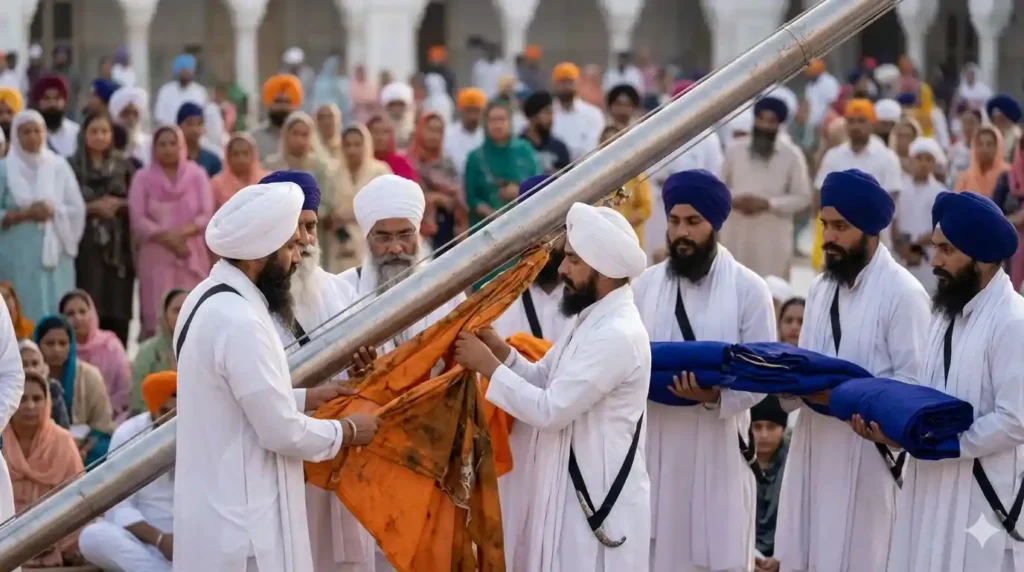
Devotees in Punjab and Jammu take an Early Morning Bath (Amrit Vela) in sacred rivers or tanks to purify the mind and body. Families visit Gurdwaras for early morning prayers. Seva (selfless service) includes cleaning the shrine, serving in the kitchen, and preparing food. The day features Akhand Path ( 48-hour continuous reading of Guru Granth Sahib ) and Kirtan ( devotional singing ) to commemorate Vaisakhi’s historical events. Nishan Sahib ( Sikh flag ) is ceremonially lowered, cleaned, and wrapped in new fabric. Sikhs receive Amrit Sanchar (Baptism) to join the Khalsa brotherhood. Nagar Kirtan brings colourful, loud, joyful processions led by Panj Pyare ( five beloved ones ) in saffron, featuring Gatka ( martial arts ), singing, and music. Langar ( community meal ) is served to all, regardless of religion or background — a symbol of equality and service.
Key Beliefs & Harvest Prayers
Birth of the Khalsa is the main observance — celebrating the creation of Khalsa Panth by Guru Gobind Singh at Anandpur Sahib in 1699, eliminating social hierarchies. Farmers pay tribute to God for a bountiful rabi harvest ( especially wheat ) and pray for continued prosperity ( Thanksgiving to God ). The day includes reading the 1st day of Vaisakh month from Bara Maha ( Song of the Twelve Months ).


