
Chet Sangrand 2026: Date, Meaning & Rituals Guide

Chet Sangrand 2026 — exact date and day
Chet Sangrand 2026 falls on Saturday, 14 March 2026. It marks 1 Chet of Bikrami Samvat 2083 – the first day of the first month of the Desi calendar year, making it the Punjabi New Year in the traditional solar calendar. On this day, the sun enters the zodiac sign of Aries (Mesha Sankranti),
signalling the end of winter and the official arrival of spring across Punjab and Pakistan. For Sikhs, Chet Sangrand carries deep spiritual weight rooted in Gurbani – both Guru Nanak Dev Ji and Guru Arjan Dev Ji open their Barah Maha (twelve-month hymn) with the month of Chet, instructing devotees to meditate on the Divine as the new year begins. For farmers across Pakistani Punjab, Chet Sangrand is the seasonal green light – wheat is nearing harvest, sugarcane planting opens, and the land transitions from the cold stillness of Poh and Magh into the productive warmth of spring.
Chet Month چیت ਚੇਤ
| Season | Spring |
|---|---|
| Days | 31 |
| Sangrand 2026 | 14 March 2026 |
| Name Meaning | From Sanskrit Chaitra – the budding month |
| Main Crops | Wheat (heading), Sugarcane (planting), Vegetables (spring sowing) |
| Farming Tasks | Wheat irrigation and fertilizer top-dress; plant sugarcane cuttings; prepare kharif nurseries |
Why Chet Sangrand is special — Punjabi New Year connection
Chet Sangrand is much more than a calendar event. It marks the beginning of the Punjabi New Year according to the traditional Desi Bikrami calendar. While many people associate Vaisakhi with new beginnings, Chet Sangrand holds the true honor of opening the annual cycle of seasons, farming, and festivals in Punjab.
Chet is the very first month of the Bikrami calendar. Sangrand refers to the day when the Sun moves from one zodiac sign to the next. On Chet Sangrand, the Sun enters Mesh Rashi (Aries), which is the first sign of the zodiac.
This transit is significant because it resets the calendar year. Farmers across Punjab consult their Jantri (traditional almanac) from this day onward. Even though Vaisakhi is more widely celebrated as a harvest festival, the official Punjabi year actually begins with Chet Sangrand. Chet is Month 1, and Vaisakh follows as Month 2.
Does the Punjabi New Year start with Chet Sangrand or Vaisakhi?
The Punjabi New Year starts with Chet Sangrand. Chet is the first month (March–April), and Vaisakhi is the first day of the second month, Vaisakh. The new solar year begins when the Sun enters Aries during Chet Sangrand.
Cultural celebrations:
Chet Sangrand welcomes the final weeks of spring, known as Basant Ritu in Punjab. The cold winter (Sisi) ends, and the land prepares for the warmth of summer (Garmi). This change brings visible beauty to the countryside.
Mustard fields (Sarson de khet) turn from deep green to pale yellow. Trees like Kachnar (Bauhinia variegata) and Amaltas burst into full bloom. In villages, families cook Kachnar ki sabzi, a spring delicacy made from fresh flowers.
The folk songs of Chet hold a special place in Punjabi literature. The most famous example comes from Waris Shah’s epic Heer. His Chet di Vaar (ballad of Chet) describes Heer’s longing for Ranjha during this month. A well-known line says: “Chet chetar banya mere yaar nu” — using the word chetar (remembrance) as a beautiful wordplay on the month’s name.
Evening folk games like Gulli-danda and Kabbadi resume as the days grow longer and village grounds dry up.
Difference between Chet Sangrand and Vaisakhi
Many people confuse Chet Sangrand with Vaisakhi. However, they are distinctly different events in the Punjabi calendar. The table below explains the key differences clearly.
| Feature | Chet Sangrand | Vaisakhi |
| Solar month | Chet (Month 1) | Vaisakh (Month 2) |
| Zodiac transit | Sun enters Mesh (Aries) | Sun enters Vrishabh (Taurus) |
| Punjabi New Year? | ✅ Yes (year starts on Chet 1) | ❌ No (marks harvest season instead) |
| Agricultural state | End of spring; mustard flowering; Rabi crop ripening | Start of wheat harvest (Fasal di vaddi) |
| Religious significance | Holy bath in rivers; no large fair | Khalsa Sajna Divas (1699); big fairs at Anandpur Sahib |
| Folk reference | Heer Ranjha by Waris Shah | Later ballads of Jassa Singh Ahluwalia |
Why do people confuse the two?
During British colonial rule, the government aligned the tax year with the wheat harvest in April (Vaisakhi) because wheat was a major cash crop. Over time, this created a misunderstanding. Additionally, after 1947, Vaisakhi gained more political and religious importance within the Sikh community. However, the traditional Bikrami cultural year has always begun with Chet Sangrand.
In short:
- Chet Sangrand = Start of the Punjabi New Year
- Vaisakhi = Start of the wheat harvest (second month)
Season and nature during Chet Sangrand
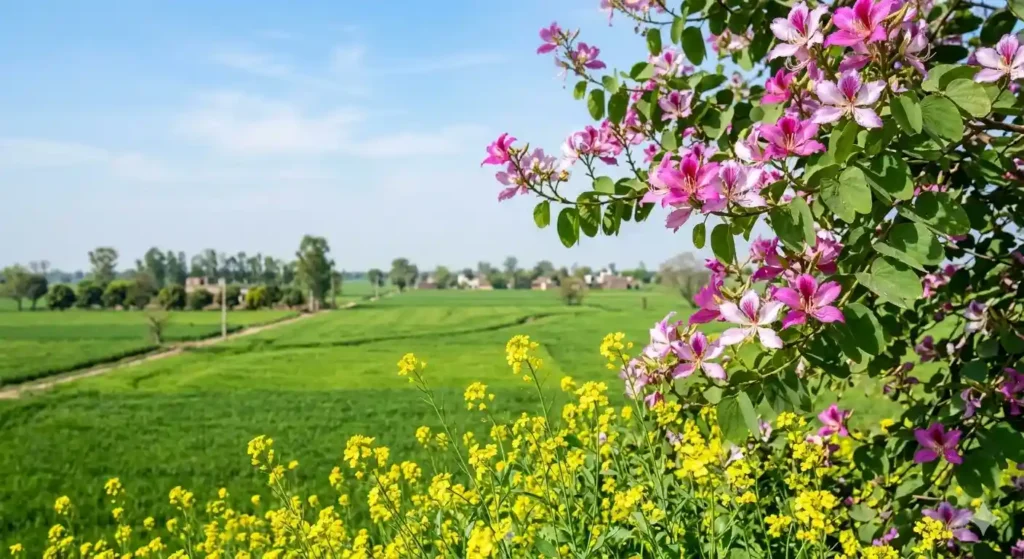
Chet spans the Time Period from March 14 to April 13. The Climate sees the icy grip of winter completely lifted and replaced by pleasant, temperate weather. Weather during Spring (Basant) brings Days that are warmer, longer, filled with sunshine, while evenings stay comfortable and mild. Checking the desi month date today confirms Nature and Environment are in a phase of Rejuvenation. Nature shows active growth and renewal as trees and plants break their rest period. Blooms dot the landscape with colorful flowers, marking the awakening of the earth. Harvest preparation begins with crops grown over winter nearing readiness for harvest, bringing a sense of joy and hope. Wildlife and Birds become active with new plumage, reflecting renewed energy across the Environment—growth, flowers, harvest, wildlife, birds, plumage, energy.
The Spiritual and Cultural Significance of Chet includes Renewal of Mind. The Barah Maha (song of the twelve months) depicts this time for the soul to bloom through meditation on the Divine, mirroring the natural world. Symbolism of awakening, hope, and new beginnings is seen throughout. In Sikh tradition, this month is associated with Environment Day, commemorating Guru Har Rai Sahib Ji, who cherished nature and promoted environmental awareness.
Rituals and prayers on Chet Sangrand
On Chet Sangrand 2026, Devotees gather at Gurdwaras to observe Key Religious Rituals and Prayers that mark the new year with deep faith and devotion:
- Recitation of Barah Maha: Reading and listening to Barah Maha — composed by Guru Arjan Dev Ji across twelve months — is the most significant act, where the stanza for the month of Chet emphasizes meditating on the Divine to gain profound joy.
- Special Kirtan Diwans: Gurdwaras hold special morning sessions of kirtan and devotional singing to welcome the new year spiritually.
- Daily Hukamnama: Devotees listen to the Hukamnama — a divine commandment from Sri Guru Granth Sahib Ji — as a guide for the month ahead.
- Karah Parshad: Offering and distributing the blessed sweet pudding remains a central part of every worship service.
- Community Gathering: Sikhs visit and connect with the Sangat — the holy congregation — fostering a strong sense of community and shared spiritual purpose.

Spiritual Practices and Reflection on Chet Sangrand
Chet is an ideal time to reset and begin a new routine rooted in Spiritual Practices and Reflection:
- Simran and Meditation: Focusing on the mantra Waheguru helps cultivate lasting inner peace.
- Reflecting on Gurbani: The specific hymn at Ang 133 of SGGS confirms that those who remember the Creator this month attain true bliss.
- Charitable Acts: Practicing Seva and selfless service makes Chet Sangrand 2026 a truly fresh and positive start to the year.


