
Sawan Sangrand 2026: Date, Monsoon & Teeyan Festival

Sawan Sangrand 2026 falls on July 16, 2026. It marks the first day of the fifth month in the Punjabi Nanakshahi calendar, also called Shravan (the solar month). This Sangrand signifies the beginning of the rainy season in Punjab. Devotees celebrate by visiting Gurdwaras, hearing the reading of the Barah Maha (a twelve months composition), and participating in special Kirtan (devotional music). The date holds significance for reflection, devotion, and aligning traditional seasons with the solar cycle. Religious Practice includes attending Gurdwara services, reading the Barah Maha, and starting the new month with monthly beginnings called Sangrand.
Sawan Sangrand 2026 — Exact Date, Day and Sunrise Time
Sawan Sangrand 2026
| Gregorian Date | 16 July 2026 |
|---|---|
| Day | Thursday |
| Desi Date | 1 Sawan |
| اردو | ساون سنگرانڈ |
| Season | Monsoon |
| Status | 87 days ago |
Why This Sawan Sangrand Matters in Punjab?
Sawan (also called Saun) is the fifth month of the Punjabi calendar, running from mid-July to mid-August. It is the peak of monsoon season, bringing relief from the intense summer heat of the preceding month Harh. This arrival is welcomed for the revitalization of nature and rejuvenation of the land. Punjab celebrates Sawan as the most celebrated month through cherished traditions like Teeyan (the Teej festival), a vibrant event dedicated to women.
Traditionally, married women return to their maternal homes to celebrate on swings tied to pipal and banyan trees, where girls gather to dance, sing Boliyan (folk songs), and perform Gidha. This season is deeply interwoven with cultural, romantic, and religious traditions. In Punjabi literature, the earth is seen as a bride waiting for her beloved — the rain. The union of Shiva and Parvati symbolizes this longing between partners. Rain, monsoon, joy, love, and celebration define this time.
The Cultural Significance: A Celebration of Rain and Love
Cultural significance of Sawan lies in celebration, rain, and love. This Sangrand (the first day) matters because it marks the formal beginning of this joyous and sacred period. In Hindu traditions, Sawan is the holiest month of the Hindu calendar for Lord Shiva. Devotees fast on Mondays (Sawan Somwar) and Tuesdays (Mangal Gauri Vrat), offering water and flowers to Shiva lingams. In the Sikh Nanakshahi calendar, this time is spiritual, characterized by singing Barah Maha (songs of the twelve months), which describes the soul-bride connecting with the divine Name of the Creator. The land becomes green. Martyrdoms are also marked — martyrdom days of Bhai Taru Singh Ji and S. Udham Singh.
Why the Sawan Sangrand Matters
It is an auspicious start (Sankranti) — a new traditional beginning. This day signifies renewal, both external and spiritual. Community prayers in Gurdwaras often host special diwans (gatherings), where the recitation of Guru Arjan Dev Ji’s hymns highlight an inner journey of spiritual renewal. Intention setting is key: believers set intentions for the upcoming month, focusing on spiritual growth and reflection. This tradition is widely accepted; people pay respects to the changing season as part of Punjabi heritage for centuries. In summary, Sawan is a celebrated period of reconnection with beauty, dedication, devotion, and renewal. It acts as a catalyst to begin a transformative journey bridging the outer world of rain and monsoon with the inner world of spiritual growth.
Teeyan and Sawan Sangrand: The Connection
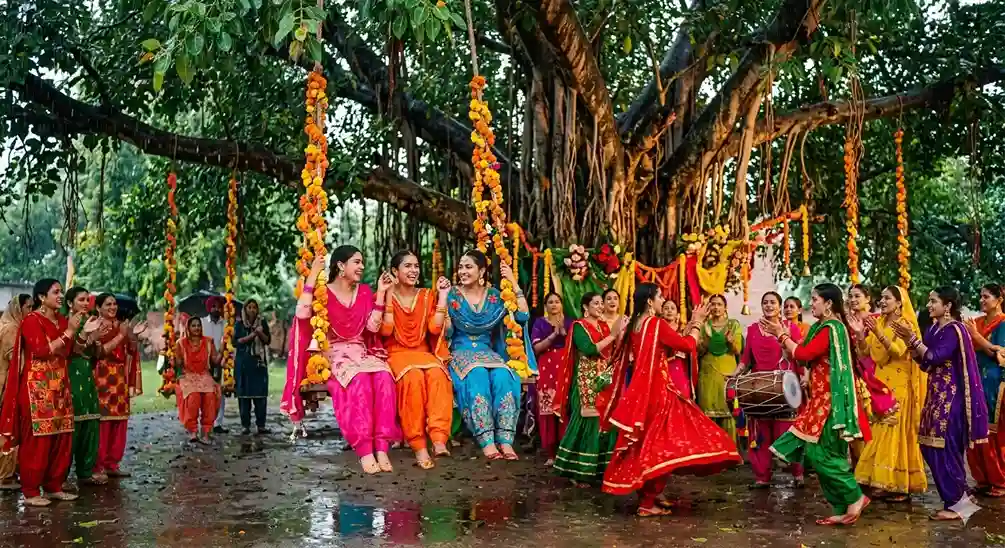
From my own experience growing up in Punjab, I’ve seen how Teeyan festival and Sawan Sangrand are intertwined like no other. Sawan Sangrand marks the first day of the Punjabi month Sawan, which falls around mid-July to mid-August. That’s the start of the rainy season – an auspicious time when the earth becomes cool after hot summer days. Right after this beginning, on the third day of the bright half of the lunar month, Teeyan begins as a month-long celebration. It lasts until the full moon (about 13 days, sometimes the whole month), making Teeyan the primary festival of this month. Here is how they connect through Timing and Seasonal Connection (Sawan Month) – one opens the door, the other dances through it.
The Cultural Theme of Monsoon and Fertility brings everything to life. With the arrival of monsoon rains, both celebrations mark the end of harsh summer and the rejuvenation of nature. Women gather to enjoy pleasant weather, singing songs that welcome the rains, celebrating joy and life. This seasonal transition is all about increased fertility, growth, and pure celebration – Teeyan celebrates this rejuvenation beautifully. I still remember my grandmother humming those rain songs; it’s not just tradition, it’s the Punjabi monsoon season feeling alive.
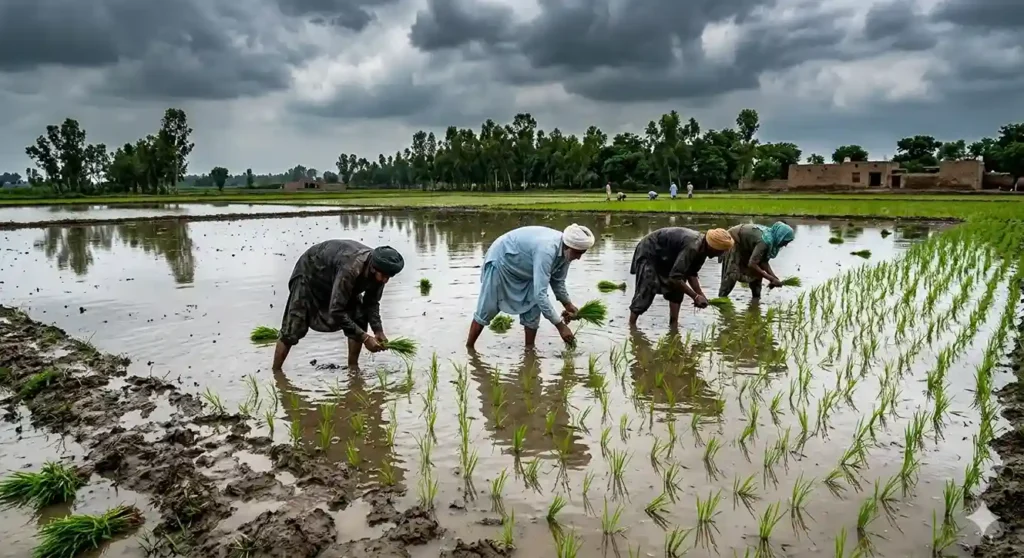
Farming in Sawan — Rice Transplanting and Kharif Growth
Sawan brings a humid, rainy environment ideal for rapid vegetative growth. For Rice Transplanting, use seedlings 25 to 35 days old with strong tillering capacity. Land Preparation requires the field puddled and ploughed 2 to 3 times in standing water to create a soft, weed-free layer. Maintain shallow depth of 2 to 3 cm and spacing of 20 to 22.5 cm apart for normal sowing, or 15 to 18 cm for late transplanting to compensate for shorter growth duration.
Water Management keeps water level at 1.5 to 3 inches for 25 days post-transplanting—Over-irrigation is wasteful. Use tensiometer-based practices to save water. Fertilisation includes Basal Dose of DAP and Urea at final puddling, plus Top Dressing second dose at 15 to 21 days to boost tillering. Apply zinc sulphate before transplanting to prevent stunting from zinc deficiency. Weed Control via Manual hand pulling or herbicides 2 to 3 days after transplanting is essential for maintaining yields.
Sikh Observances on Sawan Sangrand
Sikh Observances
On Sawan Sangrand, Sikhs visit Gurdwara Sahib for prayers and the Hukamnama (divine command) during special divans. The recitation of Baramaha—Guru Arjan Dev Ji’s twelve months—features the Sawan stanza about joy in the Lord during monsoon season. Devotees practice Naam Simran (meditation) and seva (selfless service) with dedication for the new month. Reading Gurbani from Guru Granth Sahib, they reflect on teachings to leave second love (materialism, ego) for the Lotus Feet. Kirtan, katha (discourse), and community gathering mark these observances.

Spiritual Meaning
Sawan marks monsoon arrival in Punjab. Sikhism sees this month as when the soul-bride finds happiness and emotional connection with the Creator through Naam. Remaining calm means rejecting materialistic five thieves: greed, lust, ego.


