
Jeth Sangrand 2026: Date, Peak Summer & Farming Guide
Jeth Sangrand 2026
| Gregorian Date | 15 May 2026 |
|---|---|
| Day | Friday |
| Desi Date | 1 Jeth |
| اردو | جیٹھ سنگرانڈ |
| Season | Summer |
| Status | 24 days ago |

Jeth Sangrand 2026 falls on Friday, 15 May 2026 — 1 Jeth, Bikrami Samvat 2083. It marks the sun’s entry into Gemini (Mithun Rashi) and opens the third month of the Desi calendar year, the hottest month in Punjab, when the sun is at its strongest and the days are at their longest. In the Desi calendar, Jeth and Harh together form the full summer season, but it is Jeth Sangrand that signals its peak: temperatures across Pakistani Punjab regularly cross 44°C, pre-monsoon heat settles over the plains, and the land shifts from the post-harvest ease of Vaisakh into the intensity of deep summer.
For farmers, Jeth Sangrand is a critical marker: cotton sowing opens in this month and sugarcane enters active growth. In Gurbani, Guru Arjan Dev Ji’s Barah Maha describes Jeth as the month of spiritual longing intensified by heat, a call to seek the divine when the world itself burns. The word Jeth also means “eldest” or “greatest” in Punjabi, a name fitting for a month that dominates the landscape with unyielding force.
Jeth Sangrand 2026 — Exact Date and Gregorian Calendar Equivalent
Jeth Sangrand 2026
| Gregorian Date | 15 May 2026 |
|---|---|
| Day | Friday |
| Desi Date | 1 Jeth |
| اردو | جیٹھ سنگرانڈ |
| Season | Summer |
| Status | 24 days ago |
Why Jeth Sangrand Is the Hottest Month ?
Jeth Sangrand marks the third month in Nanakshahi and Punjabi calendars ( mid-May to mid-June ), signaling the onset of the hottest period in the Punjab region. This period is characterized by intense heat, dry air, and strong, dusty storms — the peak of summer as per the Punjabi calendar. Jeth is the first of three intensely hot months (followed by Harh and Sawan), where temperature frequently exceeds 40°C–45°C. Unique weather conditions include high temperatures combined with dusty storms known for their intensity.
Cultural and religious significance: In Sikhism, this month encourages reflection, associated with sacrifices of Sikh Gurus, notably Guru Arjan Dev Ji’s martyrdom. The Barah Maha in Guru Granth Sahib describes Jeth as heat that intensifies, symbolizing a yearning to seek the cool, spiritual shade of the divine. In agrarian life of rural areas, Jeth is a crucial time where focus shifts entirely to managing the effect on livestock, preparing the land for upcoming monsoon crops following the wheat harvest from the previous month Vaisakh.
Season and Farming During Jeth Sangrand
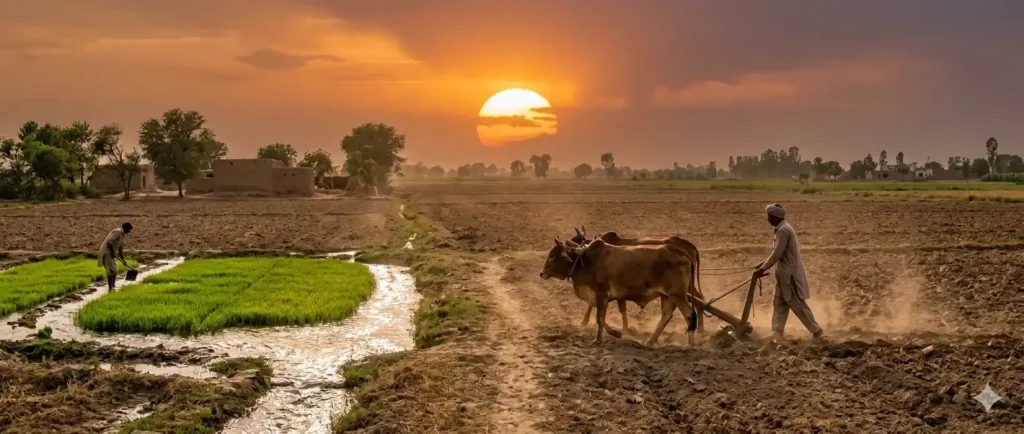
Jeth is a scorching, dry month at the height of Summer (Grishma) in Punjab. The weather is characterized by high temperatures and long days. Plants thrive and grow in these environments during this time. Farming is busy as farmers transition from the previous harvest (Vaisakh) to preparing for the next season (Sawan / Monsoon). Ploughing and Land Preparation begin with ploughing fields for rainy season planting. Irrigation requires heavy water to manage the heat and prepare Kharif crops like rice and cotton.
Harvesting of Early summer fruits, especially mangoes, occurs now. Resilience is known as farmers work diligently preparing the land for future harvests. In Gurbani (Bareh Maha), this heat is a metaphor for the soul’s yearning for the divine, emphasizing patience and seeking spiritual shelter.
Sikh and Cultural Observances on Jeth Sangrand
Jeth Sangrand: Spiritual Observances
Jeth Sangrand is a day for spiritual growth and spiritual reflection. Sikhs recite the Barah Maha (Twelve Months) composition by Guru Arjan Dev Ji from Guru Granth Sahib. The Jeth stanza captures the soul’s yearning for God. Devotees show Gurdwara Attendance in large numbers at Gurdwaras for morning diwans (services), Kirtan (devotional music), and Katha (discourse). These offer lessons for the new month. Offering Karah Prasad is a tradition. Reflection on Service and selfless service (sewa) helps set intentions for personal growth. Sangrand thus becomes a time for inner renewal.
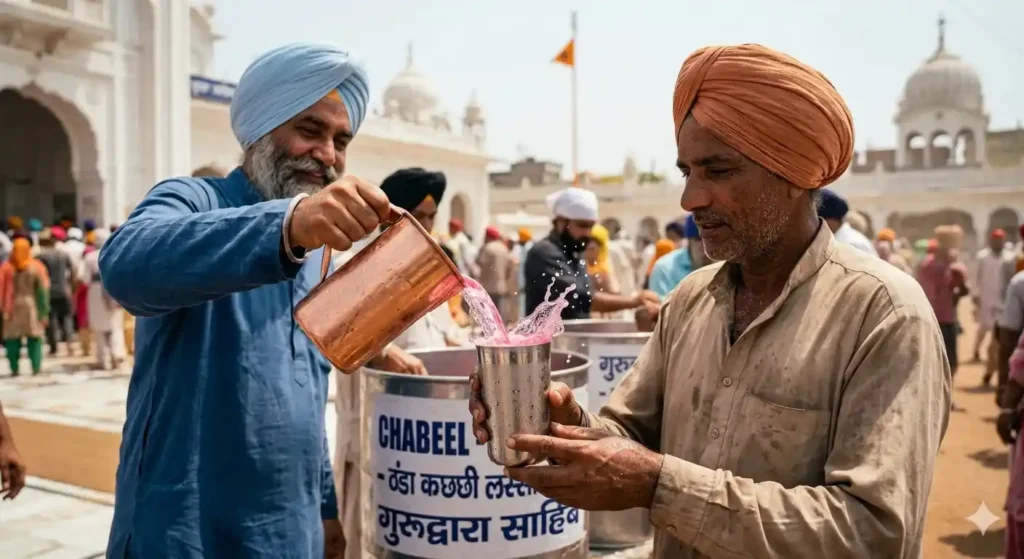
Jeth Sangrand: Cultural Observances
Jeth is a warm month in Punjab, culturally recognized as welcoming the Season and marking the start of the peak summer season. Community Gatherings bring people together alongside religious gatherings in Gurdwaras. Schools and community organizations mark the day with special assemblies and celebrations. It is a time to gather, share, and express gratitude—fostering Gratitude and Community Spirit for the season.


