Muharram 2026: What Happened in Karbala and Why It Matters Today
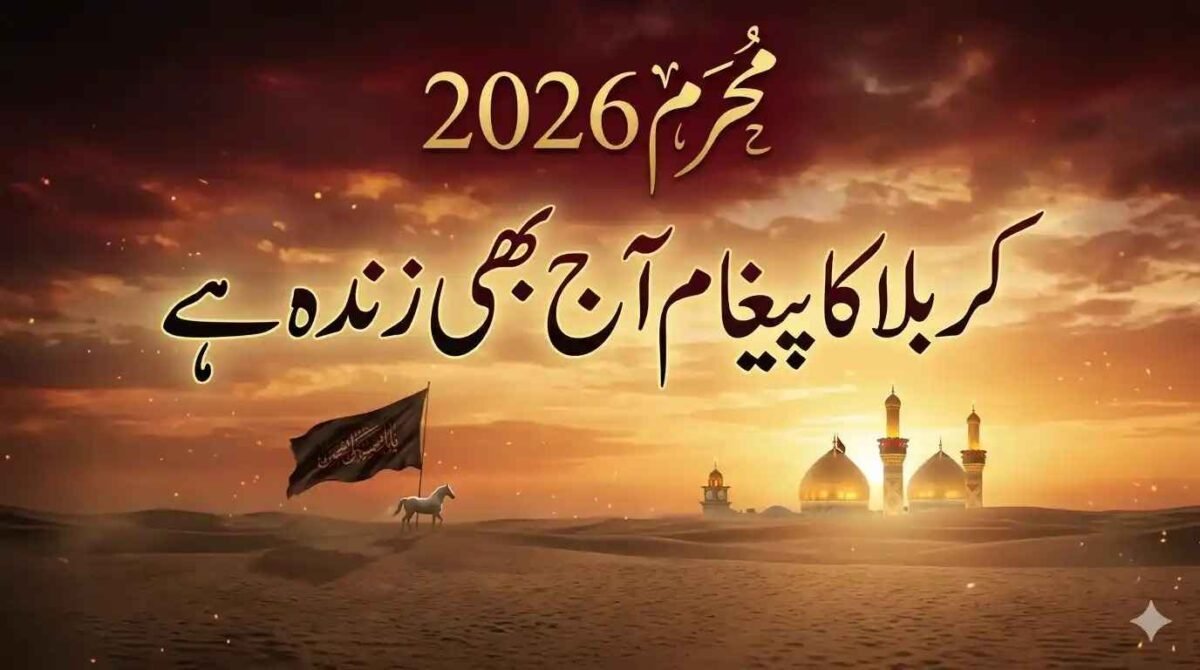
The Battle of Karbala unfolded on 10th Muharram, 61 AH — 680 CE — on the plains of Karbala, Iraq, where Imam Husayn ibn Ali RA, the grandson of Prophet Muhammad, stood outnumbered against the forces of Yazid ibn Muawiyah. What practitioners of Islamic history often overlook is how this wasn’t merely a military confrontation — it was a moral declaration, a conscious sacrifice of life against tyranny at profound personal cost. Imam Hussain RA, alongside his companions and family members, was denied water for three days, yet refused to pledge allegiance to an unjust and corrupt authority. That deliberate stand — choosing truth over survival — is what elevates Karbala beyond a tragic episode into one of the most significant events in Islamic faith, permanently woven into the sacred fabric of Muharram-ul-Haram..
What the martyrdom of Imam Hussain RA actually teaches Muslims worldwide today isn’t grief alone — it’s the courage to stand for what is right, to protect the vulnerable, and to honour commitments with divine sincerity regardless of consequence. The merits of Ashura extend beyond fasting and mourning processions in cities like Karachi, Lahore, and Islamabad — they invite genuine reflection on patience under injustice and faithfulness to Allah when circumstances demand the heaviest sacrifice. Shia Muslims observe majalis — gatherings of remembrance marking the calamity at Karbala — while Sunni Muslims fast on the 9th and 10th days, both communities converging on the same spiritual significance through different traditions. The sacredness of this day isn’t inherited passively; it must be actively claimed through worship, devotion, and the moral courage that Imam Hussain ibn Ali RA modelled with his own life — timeless, unparalleled, and deeply worth remembrance in every era.
What is Muharram?
The Arabic word itself tells you everything — forbidden, carrying the weight of divine instruction that certain behaviors are prohibited during these sacred days. Muharram sits among the four months that Allah designated in the Qur’an through Surah At-Tawbah 9:36, where the instruction arrives clearly: do not wrong yourselves during these months, for wrongdoing carries heavier consequence when committed inside what Allah has made holy. The verse registers these months as written in the heavens and earth since the day Allah created them — Dhul-Qadah, Dhul-Hijjah, Muharram, and Rajab — four pillars of the Islamic lunar calendar where warfare was prohibited among the early Arabs and where worship is exponentially more rewarding. What makes Muharram distinct even among these four is its position as the first month of the Hijri year, making it simultaneously a time of Islamic New Year and a month of elevated devotion. The Holy Prophet S.A.W. addressed this in his Hajj sermon and through succession of Sahih Bukhari 3197 narrations — affirming that the Hijri calendar’s twelve months follow Allah’s register, and that Muharram occupies a position of unique sanctity that Muslims must approach with gratitude, reflection, and devotion strong enough to strengthen their commitments for the entire year ahead. The Shahru designation is an invitation — not a passive label but an active call to increase worship and renew the purpose that faith demands..
When Will Muharram 2026 Begin?
Determining the precise start date of Muharram requires more than printing a calendar — it demands watching the crescent moon with local moon-sighting authorities whose rulings carry legal weight within each region. The official announcement for Pakistan, India, and Bangladesh places the evening of Tuesday, 16th June as the beginning of Muharram 2026, with 1st Muharram Hijri 1448 falling on June 16. The Ruet-e-Hilal Research Council provided detailed astronomical calculations confirming the new moon was born at 7:54am Pakistan Standard Time on June 15, meaning at sunset that evening the moon’s age reached approximately 12 hours — right at the minimum threshold some country rulings accept for sighting. Khalid Ejaz Mufti, serving as secretary general of the relevant moon-sighting body, confirmed these observations aligned with Islamic months’ 29 to 30 days cycle, which causes Islamic dates to shift 10 to 11 days backward against the Gregorian calendar annually. For Saudi Arabia and other Arabic countries, astronomical calculations pointed to 15th June as the likely commencement, a one-day difference that reflects how location affects crescent visibility. The Muharram-ul-Haram Wednesday June 17 2026 date cited by the Ruet-e-Hilal Research Council represents the conservative calculation — either way, Muslims worldwide should confirm through local authorities before fixing their fasting and worship schedules.
Key Dates to Remember in Muharram 2026
The Islamic New Year on 16th June 2026, marking 1448 AH, arrives not with fireworks but with quiet reflection, du’a, and supplication that anchor spiritual intentions for everything that follows. This 1st Muharram moment carries the full weight of Hijrah — the migration of Prophet Muhammad and his companions to Madinah — which formed the very foundation of the Islamic faith and gave the Hijri calendar its name and soul. Muslims who understand this commemorate the day through personal worship rather than public celebration, sitting with the sacrifices, challenges, and triumphs that the early Muslim community endured to establish the foundation of everything we inherit today. Moving forward in the month, the 10th Muharram — Ashura — lands on Thursday, 25th June 2026 according to Human Appeal and IslamicFinder calculations, though Pakistan’s Ruet-e-Hilal Committee confirmation places 26th June as 10 Muharram 1448 AH based on local moon sighting outcomes. This is the most significant day in the entire month — perhaps the most important single date on the Islamic calendar outside Ramadan — observed by Muslims across Arab countries on June 15, 2026 in some calculations, demonstrating how moon sighting variance creates regional variation without diminishing the day’s universal significance. The end of Muharram falls around July 14-15, 2026, completing a month that carried religious rituals, fasting, mourning, and remembrance across the Muslim world.
Why Do Muslims Commemorate Muharram?
The question deserves a more honest answer than most give: Muslims commemorate Muharram because Allah SWT explicitly instructed them not to wrong yourselves during it — a command that implies active worship, not passive observation. The month’s importance flows from two distinct streams that rarely get discussed together: first, its Qur’anic designation as one of twelve months where wrongdoing is graver and good deeds carry multiplied weight, as recorded in Surah At-Tawbah 9:36; second, its deep Hijrah significance as the month from which Umar ibn al-Khattab RA formally established the Hijri calendar in 1 AH — Anno Hegirae — anchoring Islamic time itself to the historic migration from Makkah to Madinah in 622 CE. That Hijra was not merely a geographic move — it represented courage, sacrifice, and absolute trust in Allah by a Muslim community that risked everything to preserve collective faith and establish an Islamic state. The caliphate of Umar ibn al-Khattab RA, which formally adopted this calendar, understood that new beginnings require institutional foundation — and Muharram provides exactly that foundation annually. Ibn Majah’s narrations alongside Surah At-Tawbah confirm that fasting Ramadan and Muharram are linked in Allah’s design, with Muharram fasting being the most virtuous voluntary act after Ramadan itself — a theological reality that should increase how seriously the Muslim community approaches this month every Hijri year.
What Happens in Muharram?
Walk through Karachi, Lahore, or Islamabad during Muharram and the atmosphere tells you immediately that this month operates differently from all others in the Islamic calendar. There is no celebration, no joy expressed through festivity — instead a deliberate mourning, a deep reverence that the Muslim world maintains not out of obligation but out of genuine understanding of what the Battle of Karbala cost. Imam Hussain RA, the grandson of Prophet Muhammad PBUH, was martyred alongside family members and companions on the 10th day — and that martyrdom became the Islamic history’s most enduring lesson about refusing oppression at any personal cost. From 1st Muharram 2026 onward, Shia Muslims gather in majalis — gatherings of remembrance — where the calamity of Karbala is recited, mourning rituals are observed, and religious events build toward the Ashura processions that fill city streets. Sunni Muslims meanwhile engage the month through fasting on the 9th and 10th days, prayers, and recitations that connect them to the Prophet Muhammad’s own Sunnah of observing this holy month with spiritual growth rather than grief-centered rituals. Pakistan’s cities host both streams simultaneously — mourning processions winding through streets while mosques fill with voluntary worship — creating an Islamic New Year atmosphere that is unlike any religious commemoration anywhere in the world.
How Do Muslims Observe Muharram?
The Sunnah of observing Muharram is more nuanced than most realize, and the Prophet Muhammad’s own practice reveals a spiritual renewal strategy worth examining carefully. When he arrived in Madinah and discovered the Jewish community fasting on Ashura, acknowledging Moses’ victory over Pharaoh — he did not dismiss their commemoration but affirmed it, saying Muslims had a stronger claim to Moses and immediately began fasting that day, as recorded in Sahih Bukhari 4680. This Sahih Muslim narration established voluntary nafl fasting on 10th Muharram as Sunnah, with the Prophet expressing his intention to fast the ninth day the following year to distinguish Islamic practice from Jews and Christians — a hadith confirmed in Ibn Majah 1736, where he said glorified be Allah, if I live to next year I shall fast the ninth. The preferred approach scholars derived from this: fast the 9th and 10th, or the 10th and 11th, to distinguish the Muslim observeance. The extraordinary promise attached to Ashura fasting — that Allah will expiate the sins of an entire year — makes this the most rewarding voluntary fast outside Ramadan, confirmed through Ayesha RA in Sahih Bukhari 1592. Beyond fasting, Muslims are encouraged toward generosity, Sadaqah Jariyah — continuous charity carrying long-lasting rewards — Qur’an recitation, Dhikr, and visiting the mosque to reflect on intentions with the devotion this four sacred months framework demands from every sincere believer.
Virtues of the Sacred Month
What most people miss about Muharram is that its virtues operate on a multiplier system — good deeds are multiplied in reward while sins carry more serious consequences, a framework Allah SWT built into all four sacred months but which Muharram carries with particular spiritual opportunity. The Sunnah practices available during this month — fasting the 9th, 10th, and 11th Muharram, increasing Dhikr and remembrance of Allah, giving Sadaqah, developing spiritual habits through Qur’an engagement — are not arbitrary recommendations but blessings precisely engineered for Muslim growth. There is a narration among scholars that Allah is generous toward whoever is generous to their family on the Day of Ashura throughout the year — a commendable tradition that reflects the spirit of the month: that generosity, moral courage, patience, and reflection on lessons from Karbala are not separate virtues but one integrated practice. The reflection this month demands is not passive — it asks Muslims to sit with the truth of what Imam Hussain RA demonstrated: that justice is worth every sacrifice, that steadfast faith produces eternal results, and that honoring this month means carrying its blessings outward into every good deed performed under Allah’s sacred calendar.
Misconceptions About the Day of Ashura
Perhaps no date in the Islamic calendar carries more misconceptions than Ashura, and addressing them directly protects Muslims from superstitions that have no foundation in Sahih Hadith or the practice of the Prophet S.A.W. and his Companions RA. Among the most widespread myths: that Prophet Adam AS was created by Allah on 10th Muharram, that Prophet Ibrahim AS was born on this day, that repentance is automatically accepted on Ashura, or that the Day of Judgement will fall on a Friday coinciding with 10th Muharram — none of these have authentic chains traceable to the four Imams or Shariah-verified sources. Equally unfounded are the superstitions around taking a bath on Ashura to avoid ill health, applying kohl to the eyes to prevent eye disease, preparing a special meal to distribute, or treating Nikkah and marriage as unlucky during the month of Muharram — all of these should be avoided as they introduce falsehoods into Allah’s month that Islam and Shariah explicitly reject. The right path in Muharram is the one the Prophet walked — fasting, worship, reflection, and Sunnah — free from evil fabrications that distort what this sacred day actually represents.
Why Muharram Holds Special Importance Today
Muharram carries historical and religious value that grows more relevant with time rather than fading — a rare quality that separates truly sacred months from merely cultural ones. The Hijrah of Prophet Muhammad from Makkah to Madinah in 622 CE established the Islamic calendar itself, and every Muharram is a living anniversary of that migration’s courage — a reminder that building something eternal requires leaving comfort behind. The martyrdom of Imam Hussain RA, the Prophet’s beloved grandson, at Karbala demonstrated that Dhul-Qi’dah, Dhul-Hijjah, Muharram, and Rajab — the twelve months’ sacred four as confirmed in Bukhari — produce individuals willing to sacrifice everything for truth. Anas bin Malik RA narrated that Allah’s Messenger said whoever revives a Sunnah that is loved by Allah will be with him in Paradise — recorded in Tirmidhi 2678 — and fasting the Day of Ashura is precisely that Sunnah, connecting every Muslim who fasts today directly to Prophet Muhammad’s own practice. The good deeds multiplied in this month, the Imam Hussain RA legacy of standing against tyranny, and the Rajab-to-Muharram rhythm of the sacred calendar all converge to make this month not a historical artifact but a living spiritual framework for Muslims navigating injustice, seeking faithfulness, and maintaining moral courage in their own Battle of Karbala — wherever that battle finds them today.
Muharram 2026 in Pakistan
Pakistan’s relationship with Muharram is simultaneously governmental, religious, and deeply communal — a combination that makes the 1st Muharram 2026 announcement on June 16 or 17, 2026 carry implications far beyond moon sighting logistics. The Central Ruet-e-Hilal Committee held its official meeting on 15th June 2026 to confirm the crescent, while the Ruet-e-Hilal Research Council had already calculated the new moon born on June 15, 2026 at 7:54 AM Pakistani time, with sunset that evening leaving the moon’s age at 12 hours — right at Pakistan’s minimum required threshold for sighting. Khalid Ijaz Mufti from the federal government confirmed the 2026 calendar printed by Cabinet Division designated Wednesday 24 and Thursday 25 June 2026 as public holidays for 9th and 10th Muharram — though the moon sighting outcome on 24 hours notice can shift what printed calendars show. Cities including Karachi, Lahore, and Islamabad prepare extensively: authorities typically restrict mobile and internet services during 9th and 10th Muharram for security reasons, while religious events, mourning rituals, and recitations mark Ashura as Youm-e-Ashura — a national day of grieving Karbala through religious processions that wind through major city centers under heavy security presence, reflecting how deeply this sacred month is woven into Pakistan’s 25-26 June national and spiritual identity.
How the Hijri Calendar Works
Understanding the Hijri calendar resolves most confusion around why Islamic dates like Ashura appear on different Gregorian days each year — the mechanism is elegantly simple once you see it. The entire system tracks the moon’s cycle rather than the sun: each new moon begins a month of either 29 or 30 days, producing a twelve-month Islamic year of 354-355 days compared to the Gregorian calendar’s 365. This drift causes Islamic dates to move backward 10-11 days against the Gregorian calendar annually — which is why Ramadan, Hajj, and Muharram rotate through all seasons over a 30-year cycle. The twelve months in sequence are: Muharram, Safar, Rabi’ al-Awwal, Rabi’ al-Thani, Jumada al-Awwal, Jumada al-Thani, Rajab, Sha’ban, Ramadan, Shawwal, Dhul Qa’dah, and Dhul Hijjah — each carrying its own spiritual weight within Allah’s design. For 2026 specifically, the Hijri calendar alignment produces: Ramadan 2026 from February 18 to March 19 as 1st Ramadan 1447; Eid al-Fitr 2026 on March 20 as 1st Shawwal 1447; Eid al-Adha 2026 on May 27 as 10th Dhul Hijjah 1447; Ashura 2026 on June 25-26 as 10th Muharram 1448; and Eid Milad un Nabi 2026 on August 25 as 12th Rabi Al Awwal 1448 — a complete roadmap of the Islamic year that demonstrates how the Hijri calendar is not just a time-keeping tool but a spiritual rhythm built into Muslim life from Muharram through to Dhul Hijjah.